The Importance of Girl Child Education in Rural India
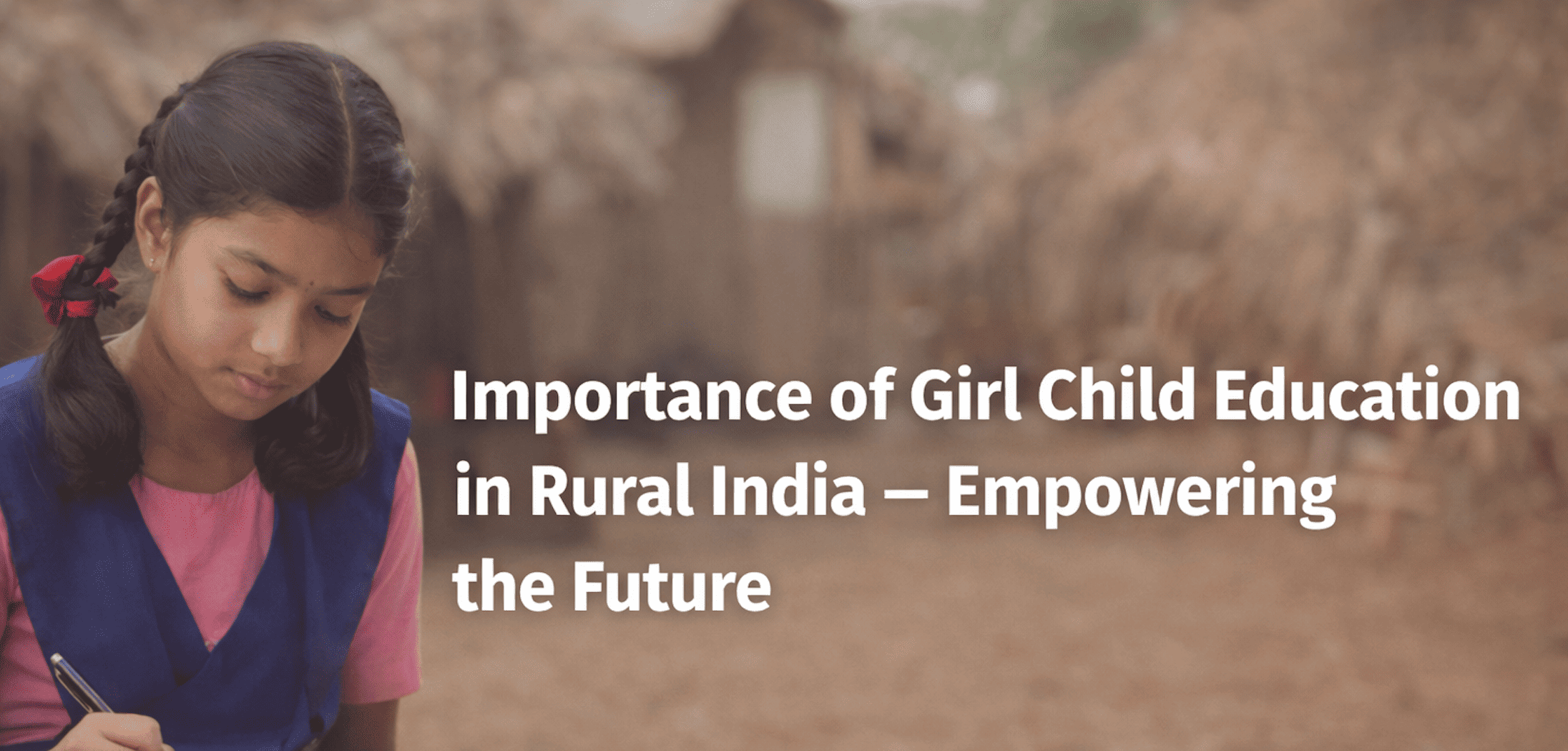
Girl child education in rural India is not just a social issue. It is a national priority. When a girl receives education, she transforms her family, her community, and ultimately the nation. However, despite progress in recent decades, millions of girls in rural India still struggle to access quality education.
Education is a fundamental human right. Yet, for many girls in villages, it remains a distant dream. Poverty, gender discrimination, child marriage, and lack of infrastructure continue to hinder progress.
Therefore, understanding the importance of girl child education in rural India is crucial. In this article, we will explore its benefits, challenges, government initiatives, and long-term impact on society.
Why Girl Child Education in Rural India Matters
Education empowers individuals. For girls in rural India, it is even more transformative.
1. Breaking the Cycle of Poverty
First and foremost, girl child education in rural India helps break the cycle of poverty. Educated girls are more likely to secure employment and earn higher incomes. As a result, they contribute financially to their families.
Moreover, educated women tend to invest more in their children’s health and education. Consequently, poverty reduces across generations.
2. Improving Health and Nutrition
Educated girls grow into informed mothers. They understand the importance of healthcare, nutrition, and hygiene.
Research consistently shows that children of educated mothers have lower mortality rates. Additionally, educated women are less likely to marry early and more likely to seek medical care during pregnancy.
Thus, the benefits of girl child education extend far beyond classrooms.
3. Promoting Gender Equality
Gender inequality remains a serious issue in rural India. However, education changes perceptions.
When families educate their daughters, they challenge traditional norms. Over time, communities begin to value girls equally.
Therefore, girl child education in rural India plays a vital role in achieving gender equality.
4. Boosting Economic Growth
An educated female population strengthens the workforce. According to economic studies, increasing female participation in the labor market significantly boosts GDP.
Hence, investing in rural education for girls is not charity. It is smart economic policy.
Current Status of Girl Child Education in Rural India
Over the past two decades, India has made progress. Enrollment rates for girls have increased at the primary level. Government schemes and awareness campaigns have contributed to this improvement.
However, challenges remain.
While many girls enroll in school, dropout rates remain high, especially after primary education. Secondary and higher education access is still limited in many rural areas.
Therefore, the importance of educating girls in rural India remains a pressing concern.
Major Challenges of Girl Child Education in Rural India Despite policy efforts, several barriers persist.
1. Poverty and Financial Constraints
Many rural families struggle to meet basic needs. As a result, they prioritize boys’ education over girls’.
Furthermore, indirect costs such as uniforms, transportation, and books discourage families from sending daughters to school.
2. Early Marriage
Child marriage remains prevalent in certain rural regions. Once married, girls often discontinue education permanently.
Early marriage limits their opportunities and reinforces gender inequality.
3. Lack of Infrastructure
In many villages, schools lack proper infrastructure. For instance:
No separate toilets for girls
Unsafe school environments
Long distances to secondary schools
These factors discourage parents from continuing their daughters’ education.
4. Cultural and Social Norms
Traditional beliefs often assign domestic responsibilities to girls. Consequently, many girls drop out to help with household work or sibling care.
Changing these deeply rooted norms requires consistent awareness efforts.
Government Initiatives Supporting Girl Child Education in Rural India
The Indian government has introduced several schemes to promote girl child education in rural India.
Beti Bachao Beti Padhao
This flagship initiative aims to address gender discrimination and promote education for girls. It focuses on improving child sex ratio and ensuring educational opportunities.
Kasturba Gandhi Balika Vidyalaya (KGBV)
This scheme provides residential schools for girls from disadvantaged communities in rural areas. It specifically targets girls who have dropped out of school.
Mid-Day Meal Scheme
The mid-day meal program encourages school attendance by providing free meals. For many rural families, this reduces financial burden and improves nutrition.
Right to Education (RTE) Act
The RTE Act guarantees free and compulsory education for children aged 6 to 14 years. This legal framework strengthens access to primary education.
Although these initiatives have improved enrollment, sustained implementation remains critical.
Long-Term Benefits of Girl Child Education in Rural India The impact of educating girls extends far into the future.
1. Stronger Families
Educated women make informed decisions about finances, health, and parenting. Consequently, families become more stable and prosperous.
2. Reduced Population Growth
Education delays marriage and childbirth. As a result, fertility rates decline naturally.
This contributes to sustainable population growth.
3. Enhanced Community Development
When girls receive education, they often become teachers, healthcare workers, entrepreneurs, or community leaders.
Thus, they uplift entire villages.
4. Increased Political Participation
Educated women are more likely to participate in governance and local decision-making. Their representation strengthens democratic processes.
Role of Parents and Communities
Government policies alone cannot solve the issue. Community participation is essential.
Parents must understand that educating daughters is an investment, not a liability. Local leaders, teachers, and NGOs must collaborate to raise awareness.
Additionally, success stories from rural communities can inspire others.
When villages collectively prioritize girl child education in rural India, lasting change occurs.
Role of NGOs and Private Sector
Non-governmental organizations play a critical role in bridging gaps.
Many NGOs provide:
Scholarships for rural girls
Free learning materials
Digital education programs
Skill development training
Similarly, private sector companies contribute through Corporate Social Responsibility (CSR) initiatives.
Public-private partnerships can accelerate progress significantly.
Digital Education and the Future of Rural Girls
Technology has the potential to revolutionize girl child education in rural India.
Online learning platforms, digital classrooms, and mobile-based education programs can overcome geographical barriers.
However, digital access remains unequal. Many rural households lack internet connectivity and devices.
Therefore, expanding digital infrastructure is essential for inclusive growth.
How Society Can Support Girl Child Education in Rural India
Every individual can contribute to change.
Here are practical steps:
Sponsor a rural girl’s education
Volunteer in village schools
Donate educational materials
Spread awareness about the importance of educating girls
Support NGOs working in rural education
Even small contributions create long-term impact.
The Way Forward
To strengthen girl child education in rural India, a multi-dimensional strategy is required.
Improve school infrastructure
Provide financial incentives to families
Ensure safe transportation
Increase awareness campaigns
Expand digital access
Strengthen policy implementation
Most importantly, society must change its mindset.
When girls receive equal opportunities, the nation progresses.
Best Time to Apply for Government Scholarships
Most government scholarship deadlines fall between October and March for programs starting in the following academic year. However, timelines vary by country and program.
To stay ahead:
Begin research at least one year in advance
Prepare standardized tests early
Gather documents months before deadlines
Monitor official announcements regularly
Early preparation reduces stress and improves application quality.
Are Government Scholarships Fully Funded?
You cannot improve what you do not measure.
Tracking expenses helps identify spending patterns and areas for improvement.
You can:
Use budgeting apps
Maintain a spreadsheet
Record daily expenses manually
After one month, review your spending habits. Are you overspending on food? Subscriptions? Entertainment?
Adjust accordingly.
Financial discipline improves with awareness.
Eligibility Criteria for Government Scholarships
Eligibility varies by program, but most government scholarships evaluate applicants using the following parameters:
Academic performance and transcripts
Citizenship or residency status
Age limits (for certain programs)
Field of study requirements
Financial background documentation
Language proficiency test scores
Always review official guidelines carefully before applying. Missing even one criterion can lead to automatic rejection.
Conclusion
The importance of girl child education in rural India cannot be overstated. It is the foundation of social justice, economic development, and national progress.
Educating a girl is not merely about literacy. It is about empowerment, dignity, and opportunity.
Although challenges remain, collective action can create meaningful change. Government policies, community efforts, NGO participation, and digital innovation must work together.
Ultimately, when rural girls receive quality education, they become catalysts of transformation.
If India aims to achieve sustainable development and gender equality, prioritizing girl child education in rural India is not optional. It is essential.