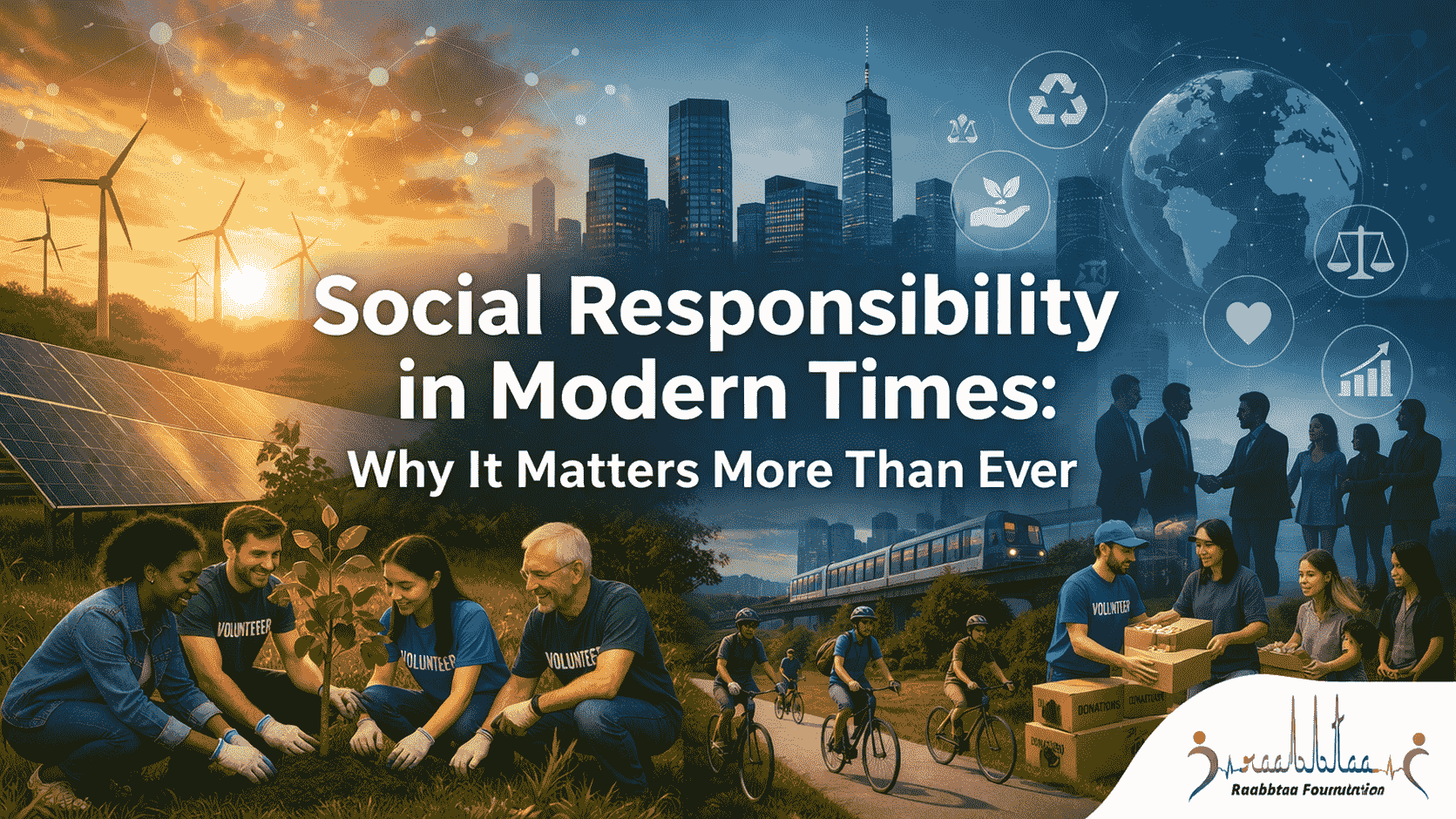
In today’s rapidly changing world, social responsibility has become more than just a moral obligation. Instead, it has transformed into a fundamental part of how individuals, businesses, and governments operate. As societies become more interconnected, the impact of our actions grows significantly.
Therefore, understanding social responsibility in modern times is essential for creating a sustainable future. Not only does it help protect the environment, but it also promotes ethical behavior, social equality, and economic stability.
Moreover, people are now more informed than ever. Consequently, they expect organizations and leaders to act responsibly. As a result, social responsibility is no longer optional—it is necessary.
This article explores what social responsibility means today, why it matters, and how everyone can contribute positively.
Understanding Social Responsibility
Social responsibility refers to the ethical duty of individuals and organizations to act in ways that benefit society as a whole. In simple terms, it means making decisions that do not harm others and, whenever possible, contribute to social good.
Traditionally, social responsibility focused mainly on charity and community service. However, in modern times, it has expanded significantly. Now, it includes environmental protection, fair labor practices, transparency, and human rights.
Furthermore, social responsibility encourages people to consider long-term consequences rather than short-term gains. As a result, it promotes sustainable growth and balanced development.
Therefore, being socially responsible means thinking beyond personal interests and considering the well-being of future generations.
The Evolution of Social Responsibility
Over the years, social responsibility has evolved alongside societal changes. In the past, businesses mainly focused on profit. Social impact was often considered secondary.
However, globalization and digital communication changed this mindset. Today, information spreads instantly. Consequently, unethical practices are quickly exposed.
Moreover, social movements and environmental crises have raised public awareness. Because of this, companies are under constant pressure to act responsibly.
At the same time, consumers have become more selective. They prefer brands that align with their values. Therefore, organizations now integrate responsibility into their core strategies.
In modern times, social responsibility has shifted from being voluntary to being expected.
Why Social Responsibility Matters Today
Social responsibility plays a crucial role in shaping a fair and sustainable society. Without responsible behavior, social and environmental problems continue to grow.
Firstly, it helps protect natural resources. Since climate change is a global threat, responsible practices are necessary for survival.
Secondly, it promotes social equality. By supporting fair wages and inclusive policies, organizations help reduce inequality.
Thirdly, it builds trust. When people act ethically, others feel more confident in their leadership and intentions.
Furthermore, social responsibility strengthens communities. It encourages cooperation, empathy, and mutual support.
As a result, responsible actions create positive ripple effects across society.
Corporate Social Responsibility (CSR) in Modern Business
Corporate Social Responsibility, commonly known as CSR, refers to how businesses contribute to social and environmental well-being.
In modern times, CSR is no longer limited to donations. Instead, it includes sustainable production, ethical sourcing, and employee welfare.
For example, many companies now reduce carbon emissions, use renewable energy, and eliminate waste. At the same time, they promote diversity and inclusion in the workplace.
Moreover, responsible companies invest in community development and education. Consequently, they strengthen their relationship with society.
Importantly, CSR also improves brand reputation. When customers trust a company, loyalty increases. Therefore, ethical practices directly support business growth.
The Role of Individuals in Social Responsibility
While businesses play a major role, individuals are equally important in promoting social responsibility.
Every day choices influence society. For instance, buying eco-friendly products supports sustainable industries. Similarly, reducing waste helps protect the environment.
Additionally, volunteering and supporting local initiatives strengthen communities. Even small actions can create meaningful change.
Furthermore, responsible individuals promote ethical behavior through their words and actions. As a result, they inspire others to follow.
In modern times, social media also plays a role. By sharing awareness campaigns, people can amplify positive messages.
Therefore, personal responsibility remains a powerful tool for social progress.
Environmental Responsibility and Sustainability
Environmental responsibility is a key pillar of social responsibility in modern times. As environmental challenges grow, sustainable practices become essential.
Firstly, pollution threatens ecosystems and human health. Therefore, reducing waste and emissions is critical.
Secondly, deforestation and resource depletion endanger biodiversity. Responsible management helps preserve nature.
Many organizations now adopt green technologies and circular economy models. Consequently, they minimize environmental impact.
Moreover, governments promote renewable energy and conservation policies. These efforts support global sustainability goals.
However, success requires cooperation. When individuals, businesses, and institutions work together, environmental protection becomes achievable.
Social Responsibility and Ethical Leadership
Ethical leadership plays a vital role in promoting social responsibility. Leaders influence organizational culture and public behavior.
Responsible leaders prioritize transparency, fairness, and accountability. As a result, they create trust within their organizations.
Moreover, ethical leaders consider the social impact of their decisions. Instead of focusing only on profits, they balance economic and social goals.
Furthermore, they encourage employee participation in social initiatives. This approach strengthens teamwork and morale.
In modern times, leadership without ethics quickly loses credibility. Therefore, responsible leadership remains essential for long-term success.
Technology and Social Responsibility
Technology has transformed how society functions. However, it also brings new responsibilities.
On one hand, digital tools improve communication, education, and healthcare. On the other hand, they raise concerns about privacy, security, and misinformation.
Therefore, responsible use of technology is necessary. Companies must protect user data and promote ethical innovation.
Additionally, artificial intelligence and automation require careful regulation. Without proper guidelines, they may increase inequality.
Nevertheless, when used responsibly, technology can solve major social problems. For example, online platforms support disaster relief and social campaigns.
Thus, ethical technology management is essential in modern society.
Challenges in Practicing Social Responsibility
Despite its importance, implementing social responsibility is not always easy.
Firstly, financial constraints may limit responsible initiatives. Small businesses often struggle with resources.
Secondly, conflicting interests can create ethical dilemmas. For instance, reducing costs may affect employee welfare.
Thirdly, lack of awareness remains a major challenge. Some people still underestimate the importance of responsible behavior.
Moreover, weak regulations can encourage unethical practices. Without proper enforcement, accountability decreases.
However, education and transparency can overcome these challenges. By promoting awareness, society can strengthen responsible practices.
Benefits of Social Responsibility
Practicing social responsibility offers numerous advantages for individuals and organizations.
Firstly, it improves reputation and credibility. People trust ethical institutions more.
Secondly, it enhances employee satisfaction. When organizations care about social issues, workers feel valued.
Thirdly, it attracts loyal customers. Responsible brands enjoy stronger market positions.
Additionally, it reduces legal risks. Ethical practices help prevent conflicts and penalties.
Furthermore, social responsibility promotes innovation. Sustainable solutions often lead to new business opportunities.
Therefore, responsibility and success often go hand in hand.
How to Promote Social Responsibility
Promoting social responsibility requires consistent effort and commitment.
Firstly, education plays a key role. Schools and organizations should teach ethical values.
Secondly, clear policies and guidelines encourage responsible behavior.
Thirdly, transparency builds accountability. When actions are visible, trust increases.
Moreover, collaboration strengthens impact. Partnerships between governments, businesses, and communities create lasting change.
Additionally, rewarding responsible behavior motivates others.
By combining these strategies, society can strengthen its commitment to social responsibility.
The Future of Social Responsibility
The future of social responsibility looks promising. As awareness grows, more people demand ethical behavior.
Sustainability will continue to shape business models. Renewable energy and green technologies will become standard.
Moreover, digital transparency will increase accountability. Companies will be closely monitored by consumers.
Additionally, global cooperation will strengthen social initiatives. International partnerships will address major challenges.
However, continuous effort is required. Without commitment, progress may slow.
Therefore, the future depends on collective responsibility and shared values.
Conclusion: Building a Responsible Society Together
Social responsibility in modern times is not just a trend—it is a necessity. In a world facing environmental, social, and economic challenges, responsible behavior is essential for survival.
Individuals, businesses, and governments must work together. By making ethical choices, supporting sustainable practices, and promoting fairness, society can achieve long-term prosperity.
Moreover, every action matters. Small steps, when multiplied, create powerful change.
Ultimately, social responsibility is about caring for others and protecting the future. When people act with integrity and compassion, they build a better world for generations to come.
Let us embrace social responsibility today and shape a brighter tomorrow.