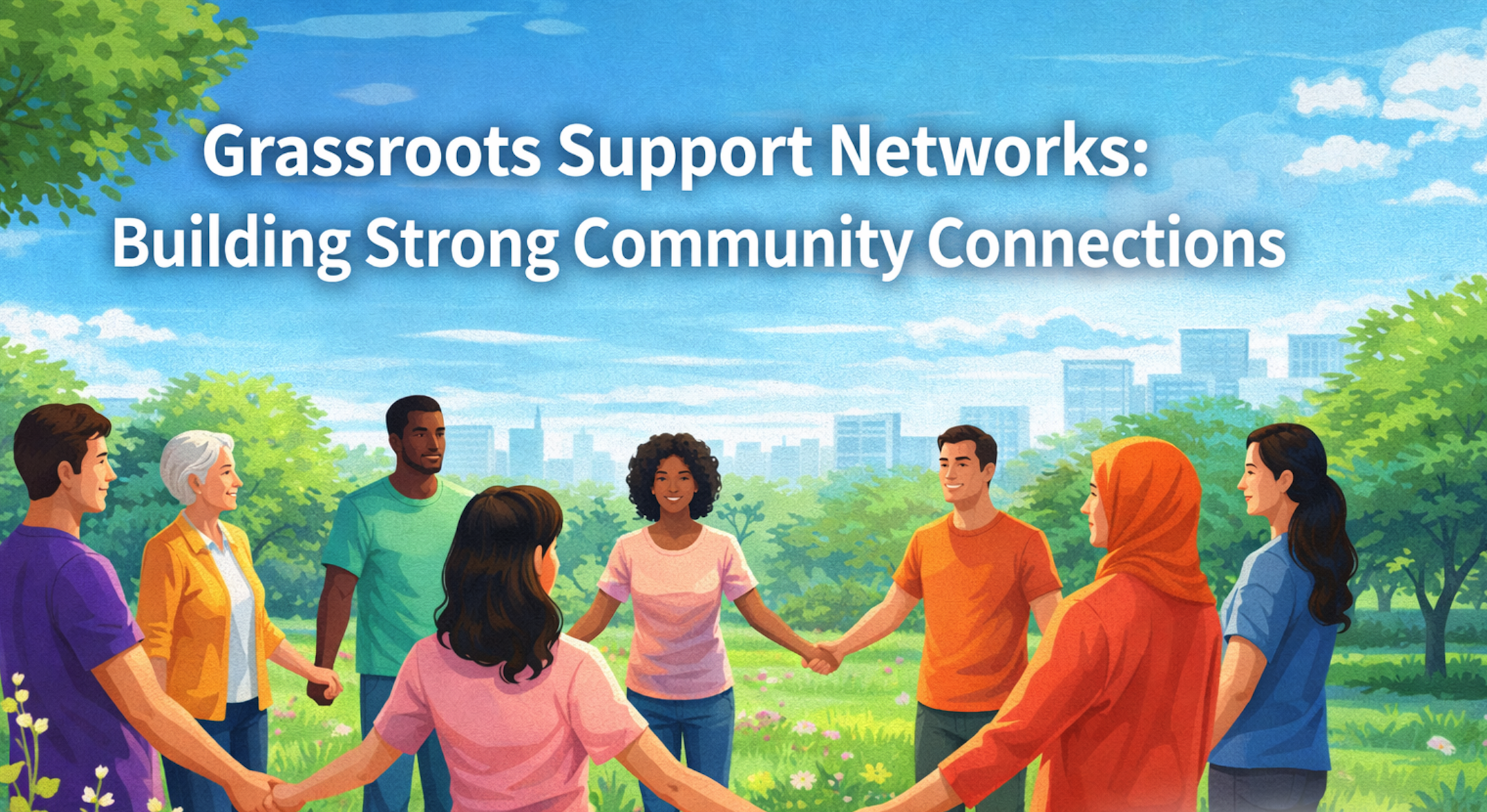
Grassroots support networks play a vital role in strengthening communities around the world. They empower individuals, promote collaboration, and encourage social responsibility. Moreover, these networks create meaningful connections that help people face challenges together.
In today’s fast-changing society, many people feel disconnected. However, grassroots initiatives bring communities closer by offering local solutions to local problems. As a result, individuals feel heard, valued, and supported.
This article explores what grassroots support networks are, why they matter, and how they can transform lives. Furthermore, it provides practical examples and actionable steps to help you participate in or build your own network.
What Are Grassroots Support Networks?
Grassroots support networks are community-based systems created and managed by local people. Instead of being controlled by large institutions, they operate from the ground up. Therefore, community members become both leaders and participants.
These networks focus on addressing everyday issues. For example, they may help with food distribution, education, healthcare access, or emotional support. Consequently, they respond directly to local needs.
Unlike traditional organizations, grassroots networks rely heavily on trust and cooperation. As a result, they build long-lasting relationships within neighborhoods.
Most importantly, they empower individuals to take responsibility for positive change.
Why Grassroots Support Networks Matter
Grassroots support networks matter because they strengthen social bonds. When people work together, they develop mutual respect and understanding. Therefore, communities become more resilient.
Additionally, these networks fill gaps left by government or private institutions. For instance, they may support vulnerable populations during emergencies. As a result, no one feels abandoned.
Moreover, grassroots initiatives encourage participation. People who were once passive become active contributors. Consequently, confidence and leadership skills grow.
Furthermore, these networks promote equality by giving everyone a voice. Therefore, marginalized groups gain opportunities to be heard.
Key Characteristics of Effective Grassroots Networks
Successful grassroots support networks share several important characteristics. Understanding these features helps communities build strong systems.
Community-Driven Leadership
First, leadership emerges from within the community. Instead of outside authorities, local individuals guide the process. Therefore, decisions reflect real needs.
This approach builds trust. Consequently, members feel comfortable sharing ideas and concerns.
Volunteer Participation
Most grassroots networks rely on volunteers. People donate time, skills, and resources willingly. As a result, operations remain flexible and affordable.
Furthermore, volunteering increases social responsibility. Therefore, participants develop a sense of ownership.
Open Communication
Clear communication is essential. Members regularly share updates, feedback, and plans. Consequently, misunderstandings are minimized.
Moreover, transparency builds credibility. Therefore, trust continues to grow.
Local Focus
Grassroots networks concentrate on specific neighborhoods or communities. Because of this focus, they provide tailored solutions. As a result, impact becomes more meaningful.
Types of Grassroots Support Networks
Grassroots support networks exist in many forms. Each type serves unique purposes while sharing common values.
Educational networks help students and parents access learning resources. They may offer tutoring, mentoring, or workshops. As a result, academic performance increases.
Furthermore, these groups encourage lifelong learning.
Health and Wellness Networks<
These networks provide emotional, mental, and physical health support. For example, they may organize counseling sessions or fitness programs. Consequently, community well-being improves.
Additionally, they reduce stigma around health issues. Therefore, more people seek help.
Educational Support Groups
Educational networks help students and parents access learning resources. They may offer tutoring, mentoring, or workshops. As a result, academic performance increases.
Furthermore, these groups encourage lifelong learning.
Economic Support Networks
Some networks focus on employment and financial stability. They may organize job training or micro-financing programs. Consequently, families achieve greater independence.
Moreover, they stimulate local economies.
Environmental Action Groups
Environmental grassroots networks protect natural resources. They promote recycling, conservation, and clean energy. Therefore, communities become more sustainable.
Benefits of Grassroots Support Networks
Grassroots support networks offer numerous advantages to individuals and society.
Stronger Social Connections
First, these networks reduce social isolation. People interact regularly and form meaningful friendships. As a result, emotional well-being improves.
Moreover, supportive relationships increase resilience.
Empowerment and Confidence
When individuals contribute to solutions, they feel empowered. Consequently, self-esteem grows.
Furthermore, leadership opportunities develop naturally.
Faster Problem-Solving
Local communities understand their challenges better than outsiders. Therefore, grassroots networks respond quickly. As a result, issues are resolved efficiently.
Inclusive Decision-Making
Everyone has a voice. Therefore, decisions reflect diverse perspectives. Consequently, solutions become more balanced and fair.
Long-Term Sustainability
Because communities manage their own networks, they remain active for years. As a result, benefits continue over time.
The Role of Technology in Grassroots Networks
Technology has transformed grassroots support systems. It enhances communication and coordination.
Social media helps spread awareness quickly. Consequently, more people join initiatives.
Online platforms simplify fundraising. Therefore, financial resources increase.
Additionally, digital tools enable remote collaboration. As a result, geographical barriers disappear.
However, balancing technology with personal interaction remains important.
How You Can Get Involved
Everyone can contribute to grassroots support networks. Your participation makes a difference.
First, volunteer your time. Even small efforts matter.
Second, donate resources if possible. Financial and material support strengthens programs.
Third, share information. Promoting initiatives increases participation.
Finally, start your own project. With dedication, you can inspire others.
Future of Grassroots Support Networks
The future of grassroots networks looks promising. As communities face complex challenges, local cooperation becomes essential.
Climate change, economic uncertainty, and social inequality require collective action. Therefore, grassroots movements will continue to grow.
Moreover, younger generations show strong interest in social impact. Consequently, innovation and creativity will flourish.
With proper support, these networks can reshape societies for the better.
Conclusion: Strengthening Society Through Grassroots Support
Grassroots support networks are powerful tools for community development. They promote cooperation, empathy, and shared responsibility.
By empowering individuals, they create lasting social change. Moreover, they provide hope during difficult times.
Whether you join an existing network or build your own, your involvement matters. Together, communities can overcome challenges and thrive.
Now is the time to support grassroots initiatives and become part of positive transformation.