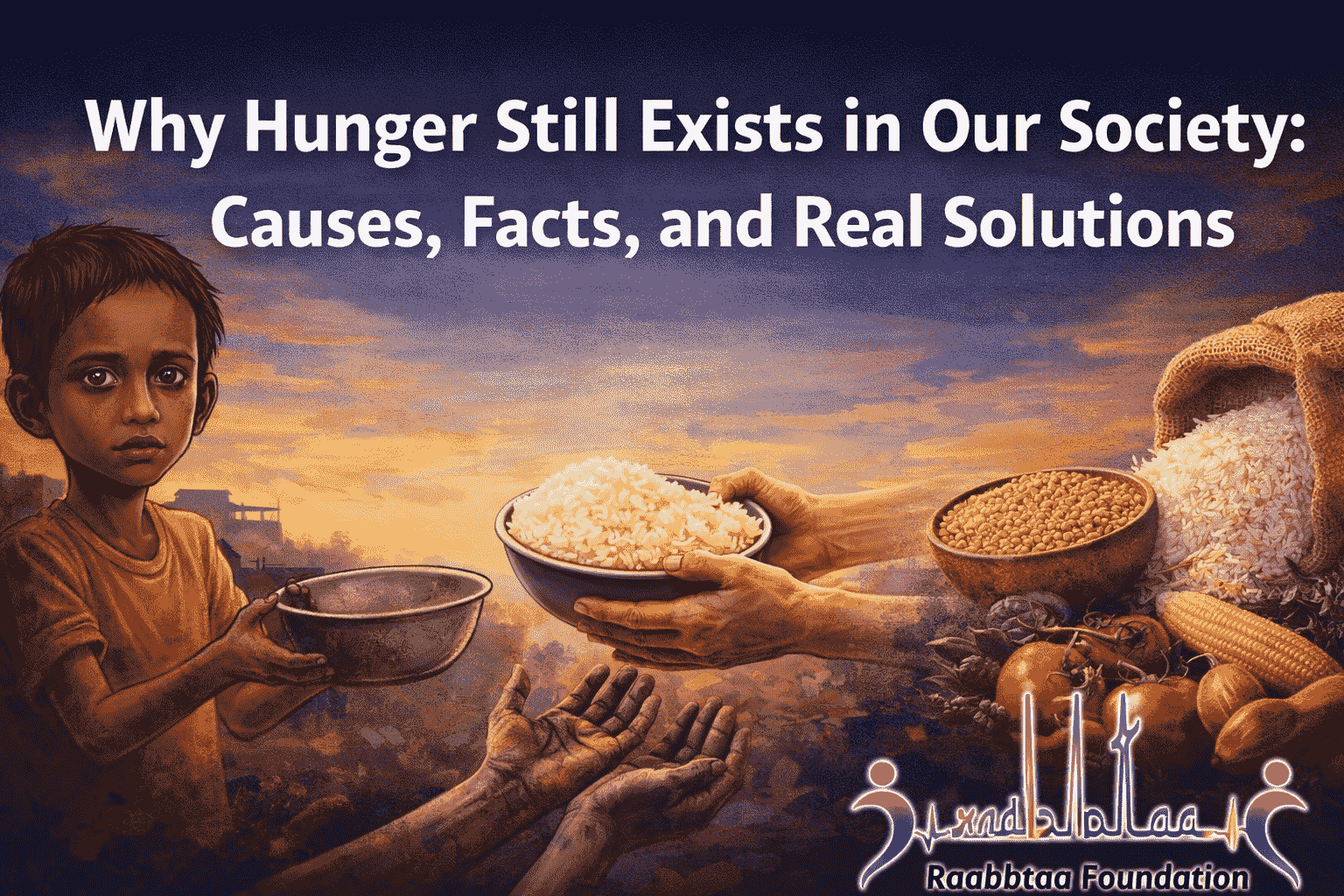
Hunger remains one of the most persistent global challenges despite advancements in technology, agriculture, and economic development. Understanding why hunger still exists is essential for policymakers, organizations, and individuals who want to create meaningful change. In a world capable of producing enough food for everyone, millions still struggle daily to access basic nutrition. This paradox highlights deep systemic issues rather than simple food shortages.
This article explores the real reasons hunger persists, the social and economic mechanisms behind it, and actionable solutions that can reduce food insecurity worldwide.
Understanding Hunger in the Modern World
Hunger is not merely the absence of food; it is a complex socio-economic condition defined by limited or uncertain access to adequate nutrition. Experts often use the term food insecurity to describe this condition. Food insecurity can range from worrying about running out of food to going entire days without eating.
Modern hunger differs from historical famine. While famines were often caused by crop failures or natural disasters, today’s hunger is more frequently the result of systemic inequality, political instability, and distribution failures.
Global Hunger Statistics That Reveal the Reality
To understand why hunger still exists, it is crucial to look at the numbers:
Hundreds of millions of people worldwide experience chronic hunger.
Children make up a disproportionate percentage of undernourished populations.
Many food-insecure individuals actually live in countries that produce surplus food.
Malnutrition contributes to nearly half of deaths in children under five.
These statistics show that hunger is not confined to one region or income level. It affects both developing and developed nations, though the severity varies.
Main Reasons Why Hunger Still Exists
1. Poverty and Income Inequality
The most significant driver of hunger is poverty. People without sufficient income cannot afford nutritious food even when it is readily available. Economic inequality intensifies this issue, concentrating wealth and resources in the hands of a few while leaving others without basic necessities.
Low wages, unemployment, and unstable work conditions often force families to prioritize cheaper, less nutritious food options or skip meals altogether.
2. Food Waste and Distribution Problems
Ironically, the world produces more than enough food to feed everyone. However, a large portion is wasted due to inefficient supply chains, poor storage infrastructure, and consumer habits.
Food waste occurs at multiple levels:
Agricultural production losses
Transportation spoilage
Retail discards
Household waste
This imbalance between abundance and access is a central explanation for why hunger still exists despite global food surplus.
3. Conflict and Political Instability
War and political unrest disrupt agriculture, transportation, and markets. When infrastructure collapses, food cannot reach communities even if it exists elsewhere. Displaced populations are especially vulnerable because they lose livelihoods, land, and access to local food systems.
Conflict-affected regions consistently show the highest rates of food insecurity.
4. Climate Change and Environmental Stress
Climate variability has made farming less predictable. Droughts, floods, extreme temperatures, and shifting seasons reduce crop yields and livestock productivity. Small-scale farmers, who produce much of the world’s food, are particularly affected because they lack resources to adapt.
Environmental degradation such as soil erosion, water scarcity, and deforestation further threaten food production.
5. Lack of Infrastructure
In many regions, farmers cannot transport crops to markets due to poor roads, limited storage facilities, or lack of refrigeration. Without infrastructure, food spoils before reaching consumers, and farmers lose income, perpetuating poverty and hunger simultaneously.
6. Rising Food Prices
Food price inflation makes essential staples unaffordable for vulnerable populations. Even small increases can significantly impact households living paycheck to paycheck. Price spikes often result from global supply disruptions, fuel costs, or trade restrictions.
7. Social Inequality and Discrimination
Marginalized groups frequently experience higher hunger rates. Gender inequality, racial discrimination, and lack of access to education can limit employment opportunities and reduce earning potential, leading to food insecurity.
Women and children are disproportionately affected because they often eat last or least in resource-constrained households.
Hidden Hunger: The Silent Crisis
When discussing why hunger still exists, it is important to recognize hidden hunger, also known as micronutrient deficiency. This form of hunger occurs when individuals consume enough calories but lack essential vitamins and minerals.
Hidden hunger can lead to:
Weakened immune systems
Stunted growth in children
Reduced cognitive development
Increased disease risk
Because it is less visible than starvation, hidden hunger often receives less attention despite its widespread impact.
The Economic Impact of Hunger
Hunger is not only a humanitarian issue but also an economic one. Malnutrition reduces productivity, increases healthcare costs, and limits educational attainment. Countries with high hunger rates often experience slower economic growth because undernourished populations cannot perform at their full potential.
Investing in nutrition programs yields significant economic returns. Studies show that improving nutrition can increase workforce productivity and reduce long-term public health expenses.
Why Hunger Still Exists in Developed Countries
Many people assume hunger is only a problem in low-income nations, but food insecurity also affects wealthy countries. Factors contributing to hunger in developed economies include:
High living costs
Housing expenses consuming most income
Medical debt
Low minimum wages
Limited access to affordable fresh food in certain neighborhoods
Urban “food deserts,” where grocery stores are scarce, force residents to rely on convenience stores with limited healthy options.
The Role of Government Policies
Public policy plays a major role in determining food access. Subsidies, trade laws, agricultural regulations, and welfare programs all influence food availability and affordability.
When governments invest in:
School meal programs
Food assistance initiatives
Agricultural support for small farmers
hunger rates typically decline. Conversely, policy gaps or corruption can worsen food insecurity.
How Technology Can Help Reduce Hunger
Technological innovation offers promising solutions to global hunger challenges. Modern tools are improving food production, distribution, and accessibility.
Examples include:
Precision agriculture using data analytics
Drought-resistant crop varieties
Mobile apps connecting farmers to markets
Supply chain tracking systems to reduce waste
While technology alone cannot solve hunger, it can significantly improve efficiency when combined with effective policy and social programs.
Community-Level Solutions to Hunger
Local initiatives often produce powerful results because they address specific community needs. Grassroots programs may include:
Community gardens
Food banks and pantries
Cooperative farming
Meal sharing networks
Such programs not only provide food but also strengthen social connections and resilience.
Corporate Responsibility in Ending Hunger
Businesses influence food systems through production, distribution, and pricing. Responsible corporate practices can reduce hunger by:
Donating surplus food
Supporting fair wages
Reducing supply chain waste
Investing in sustainable agriculture
When companies adopt ethical sourcing and distribution policies, they contribute to long-term food security.
Practical Steps Individuals Can Take
Understanding why hunger still exists should inspire action. Individuals can help combat hunger through simple but impactful steps:
Reduce household food waste
Support local farmers
Donate to food assistance organizations
Advocate for fair food policies
Volunteer at community kitchens
Collective small actions create meaningful change over time.
Long-Term Strategies to End Hunger
Experts agree that ending hunger requires coordinated global efforts addressing root causes rather than symptoms. Effective long-term strategies include:
Investing in rural agriculture
Expanding education access
Strengthening social safety nets
Improving infrastructure
Promoting gender equality
These systemic approaches tackle the structural factors that explain why hunger still exists.
The Connection Between Hunger and Education
Education and hunger are closely linked. Children who attend school hungry struggle to concentrate and learn. Poor academic performance reduces future employment opportunities, perpetuating poverty and food insecurity.
School feeding programs have proven highly effective because they both nourish children and encourage school attendance. Educated populations are better equipped to secure stable jobs and make informed nutritional choices.
Myths About Hunger That Need to Be Addressed
Several misconceptions prevent people from fully understanding hunger:
Myth 1: Hunger is caused by food shortages.
Reality: Distribution and access issues are the main causes.
Myth 2: Only poor countries experience hunger.
Reality: Food insecurity exists worldwide, including wealthy nations.
Myth 3: Hunger cannot be solved.
Reality: Proven solutions exist; implementation and political will are the main challenges.
Correcting these myths is essential for mobilizing effective solutions.
Why Solving Hunger Matters for Everyone
Ending hunger benefits all of society, not just those directly affected. Food security contributes to:
Economic stability
Public health improvements
Reduced crime rates
Stronger communities
Sustainable development
A well-nourished population is more productive, innovative, and resilient, which supports national and global progress.
Future Outlook: Can Hunger Be Eliminated?
Experts believe hunger can be drastically reduced within decades if governments, businesses, and communities work together. The resources and knowledge already exist. What remains is consistent commitment, investment, and cooperation.
Progress has been made in many regions through targeted nutrition programs, agricultural improvements, and poverty reduction initiatives. However, setbacks such as conflicts, pandemics, and climate events show that progress must be continuously protected and strengthened.
Conclusion: Addressing Why Hunger Still Exists
The question of why hunger still exists does not have a single answer. Hunger persists because of interconnected factors including poverty, inequality, conflict, climate change, and inefficient food systems. Solving it requires comprehensive strategies that address these root causes simultaneously.
The encouraging reality is that hunger is not inevitable. With coordinated global action, responsible policies, technological innovation, and community engagement, it is possible to ensure everyone has access to sufficient, nutritious food. Recognizing the complexity of the problem is the first step toward building lasting solutions.