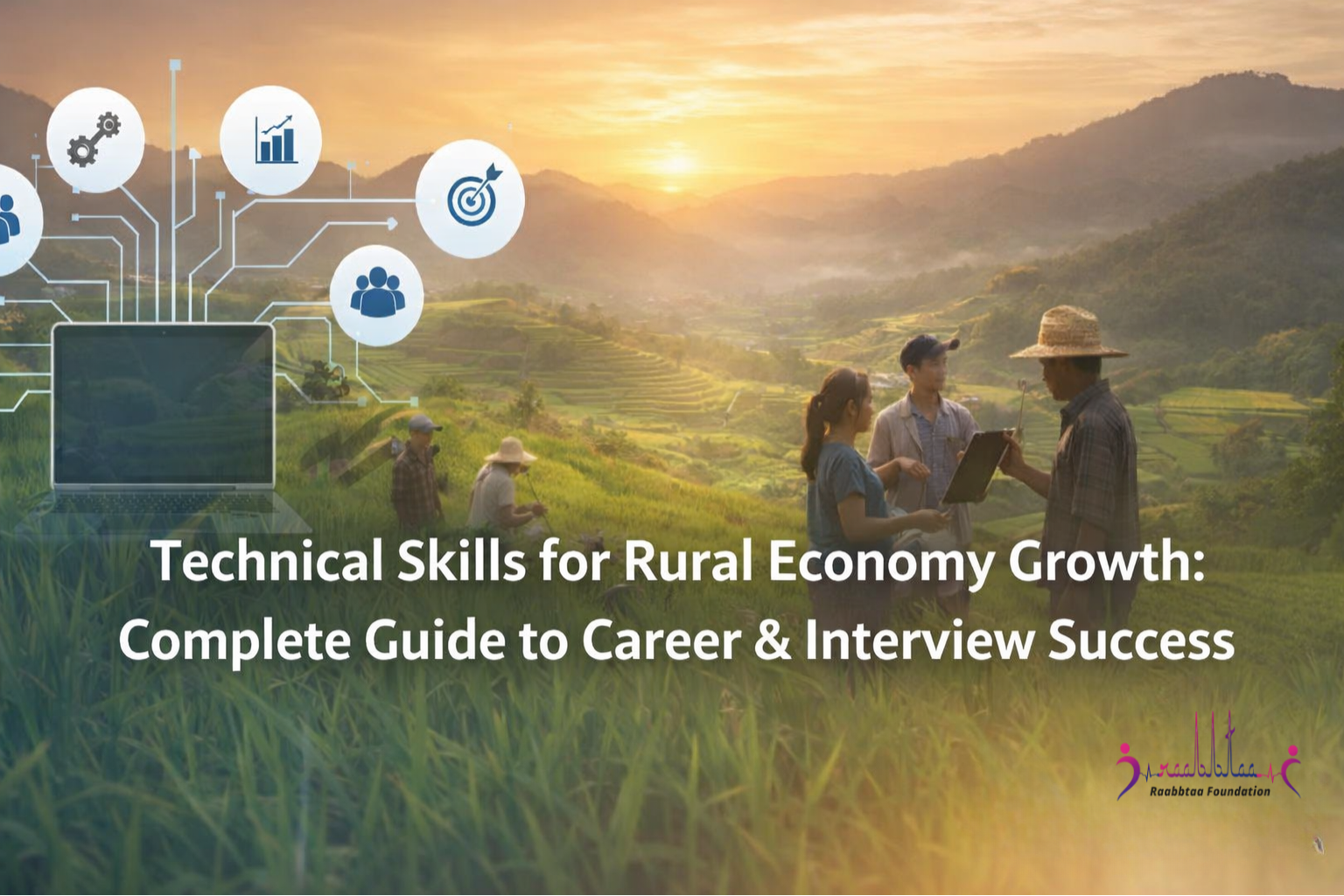
Technical Skills for Rural Economy Growth and Interview Success
The rural economy is undergoing a major transformation. Traditionally dependent on agriculture, it is now expanding into technology-driven sectors, small-scale manufacturing, digital services, and skill-based entrepreneurship. However, one factor determines sustainable growth more than anything else — technical skills.
Technical skills for rural economy development are no longer optional. They are essential for improving productivity, creating employment opportunities, and helping individuals succeed in competitive job markets. Moreover, strong interview preparation combined with technical expertise increases employability significantly.
In this comprehensive guide, you will learn:
Why technical skills matter in the rural economy
High-demand technical skills for rural youth
How skill development strengthens rural employment
Practical interview preparation strategies
Career-building tips for rural professionals
Why Technical Skills Are Crucial for the Rural Economy
The rural economy contributes significantly to national GDP in many countries. However, productivity gaps still exist due to limited access to advanced skills and modern tools.
1. Enhancing Agricultural Productivity
Modern agriculture now uses:
Precision farming tools
IoT-based irrigation systems
Farm management software
Data analytics for crop planning
When rural professionals learn these technical skills, farm output increases while costs decrease. As a result, farmers become more profitable and sustainable.
2. Promoting Rural Entrepreneurship
Technical skills empower rural youth to start:
Repair and maintenance workshops
Agro-processing units
Digital service centers
Solar energy installations
Consequently, self-employment opportunities increase, reducing migration to urban areas.
3. Creating Non-Farm Employment Opportunities
Rural economy development today includes:
Renewable energy
Rural BPO services
E-commerce logistics
Mobile repair services
Construction technology
Therefore, technical skill development directly expands job markets beyond agriculture.
Most In-Demand Technical Skills for Rural Economy Growth
To strengthen the rural economy, individuals must focus on practical and industry-relevant skills. Below are high-demand technical skills that offer strong career potential.
1. Digital Literacy and Basic IT Skills
Digital literacy is the foundation of modern employment. Essential skills include:
MS Office and documentation
Email communication
Data entry
Online form submissions
Basic cybersecurity awareness
Furthermore, digital literacy allows rural youth to access online job portals and remote work opportunities.
2. Agricultural Technology Skills
Agri-tech skills are transforming rural farming. Important competencies include:
Drone operation for crop monitoring
Soil testing techniques
Farm automation tools
Smart irrigation systems
Agricultural data analysis
These skills increase efficiency and reduce waste.
H3: 3. Renewable Energy and Solar Installation
With increasing rural electrification, solar energy systems are in demand. Learning:
Solar panel installation
Battery maintenance
Electrical wiring
Energy efficiency assessment
can create sustainable income opportunities.
4. Mechanical and Electrical Repair Skills
Technical repair services are always required in rural areas. Skills include:
Motor rewinding
Tractor repair
Pump maintenance
Electrical fault diagnosis
These skills ensure consistent demand and local economic circulation.
5. Construction and Infrastructure Skills
Rural infrastructure development requires:
Masonry
Plumbing
Welding
Carpentry
Surveying
These technical skills for rural economy development directly support housing and public works projects.
How Technical Skills Improve Rural Employment Opportunities
Technical skills do more than just improve productivity. They transform career outcomes.
1. Higher Employability
Employers prioritize candidates with:
Practical certifications
Hands-on experience
Technical troubleshooting ability
Therefore, skill-based candidates often secure jobs faster.
2. Better Income Stability
Skilled professionals can:
Charge premium service fees
Start small businesses
Offer contract-based services
This increases income predictability.
3. Reduced Rural-to-Urban Migration
When employment opportunities grow locally, migration decreases. As a result, rural economies become more self-sufficient.
Technical Skills and Interview Preparation: A Winning Combination
Even with strong technical skills, many candidates fail during interviews due to poor preparation. Therefore, combining skill mastery with interview readiness is essential.
1. Understand the Job Description Thoroughly
Before attending an interview:
Analyze required technical competencies
Match your skills with job expectations
Prepare examples of practical experience
This alignment increases confidence.
2. Prepare Technical Demonstrations
Interviewers often test:
Problem-solving ability
Tool familiarity
Practical troubleshooting
Prepare real-world examples, such as:
How you fixed a pump motor
How you installed a solar system
How you improved farm yield using technology
Specific examples strengthen credibility.
3. Practice Common Technical Interview Questions
Examples include:
Explain a technical problem you solved.
How do you ensure safety during installation?
What tools are you familiar with?
How do you troubleshoot equipment failure?
Practice structured answers using the STAR method (Situation, Task, Action, Result).
4. Improve Communication Skills
Technical knowledge alone is not enough. Clear communication demonstrates professionalism.
Focus on:
Clear explanations
Structured responses
Confident body language
Eye contact
Skill Development Strategies for Rural Youth
To build technical skills for rural economy growth, follow a structured development plan.
1. Enroll in Skill Training Programs
Look for:
Government skill missions
Vocational training institutes
ITI certifications
Agricultural extension programs
These programs provide industry-recognized certifications.
2. Learn Through Apprenticeship
Hands-on training is crucial. Work under experienced technicians to gain:
Practical exposure
Tool handling expertise
Real-time troubleshooting skills
Experience enhances interview performance.
3. Use Online Learning Platforms
Even in rural areas, mobile internet allows access to:
Technical tutorials
Online certification courses
Remote skill-building workshops
Digital learning bridges knowledge gaps.
Common Mistakes in Technical Interview Preparation
Avoid these errors to improve success rates.
1. Memorizing Without Understanding
Interviewers assess practical comprehension, not memorization.
2. Ignoring Soft Skills
Many technically skilled candidates fail due to poor communication.
3. Not Researching the Employer
Understanding the company’s service area and technical focus demonstrates seriousness.
Future Trends in Rural Economy and Technical Skills
The rural economy is evolving rapidly. Future opportunities include:
Smart farming
Rural e-commerce logistics
Digital financial services
Renewable energy expansion
Agro-processing industries
Therefore, continuous skill development is essential to remain competitive.
Action Plan: Build Technical Skills and Prepare for Interviews
Here is a simple roadmap:
Identify in-demand technical skills in your area.
Enroll in certified training.
Gain practical hands-on experience.
Build a small project portfolio.
Practice technical interview questions weekly.
Improve communication skills consistently.
Consistency leads to career growth.
Conclusion: Health Insurance Is Essential for Low-Income Families
Technical skills for rural economy development are powerful tools for economic transformation. They increase productivity, create employment, encourage entrepreneurship, and reduce migration.
However, skill development alone is not enough. Strong interview preparation ensures that candidates convert technical competence into job opportunities.
By combining:
Industry-relevant technical skills
Continuous learning
Practical experience
Structured interview preparation
rural youth can build sustainable careers and contribute significantly to local economic development.
The future of the rural economy depends on skill-based empowerment. Therefore, invest in technical learning today to secure long-term professional success.