Every organization, community, and professional journey is shaped by real experiences. While reports and statistics provide valuable information, stories from the field bring those numbers to life. They reflect genuine emotions, challenges, and achievements that cannot be captured through data alone.
Moreover, these stories help people understand what truly happens on the ground. They highlight human connections, problem-solving skills, and the power of perseverance. As a result, they become powerful tools for learning and inspiration.
In this blog, we will explore meaningful stories from the field, examine their importance, and understand how they influence growth and innovation. Additionally, we will share real-life examples that demonstrate the impact of fieldwork across different sectors.
Why Identifying Needy Families Accurately Matters
Accurate identification is essential because resources such as food, shelter support, healthcare aid, and educational assistance are often limited. If assessment systems are weak or inconsistent, assistance may go to those who do not need it most, while vulnerable households remain underserved.
Moreover, proper identification:
Improves program efficiency
Reduces fraud and duplication
Strengthens accountability
Enhances community trust
Ensures equitable distribution
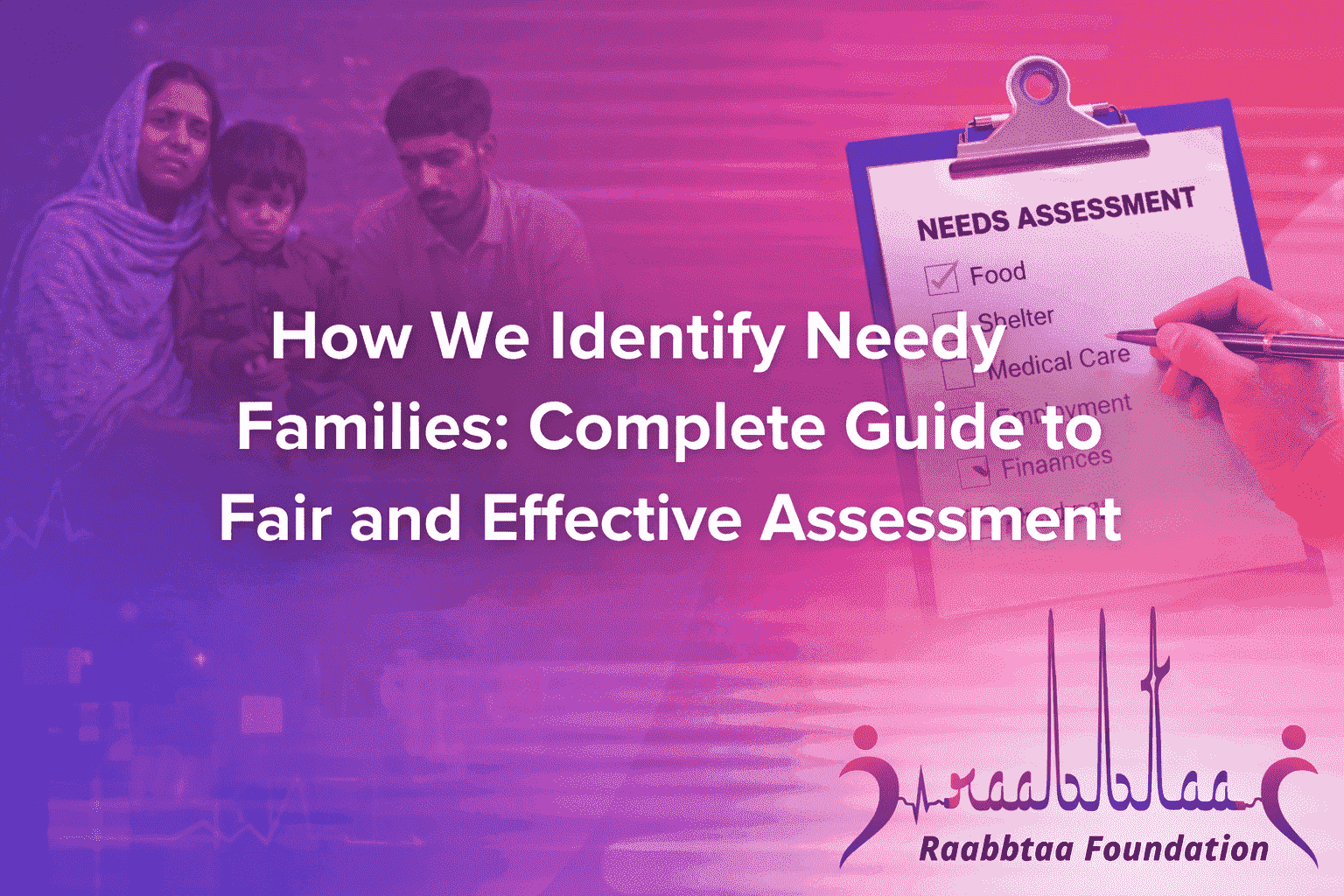
Therefore, organizations must implement clear frameworks that define how we identify needy families in measurable and objective ways.
Core Principles Behind Our Assessment Process
Before discussing technical steps, it is important to understand the guiding principles that shape our methodology.
1. Fairness and Equality
Every applicant is evaluated using the same standardized criteria. Personal bias, favoritism, or discrimination are strictly avoided.
2. Transparency
Applicants and donors can clearly see how decisions are made. Transparency ensures credibility and protects the integrity of aid programs.
3. Data-Driven Decision Making
Whenever possible, eligibility decisions rely on verifiable data rather than assumptions or anecdotal reports.
4. Confidentiality
Sensitive information such as income details or medical conditions is handled securely and respectfully.
Primary Criteria Used to Identify Needy Families
To understand how we identify needy families, you must first examine the indicators used to measure need. These indicators fall into several categories.
Income Level Assessment
Income is one of the most direct indicators of financial hardship. We compare household earnings against regional poverty thresholds or cost-of-living indexes.
Evaluation includes:
Monthly income vs. family size
Employment stability
Sources of income
Debt burden
Families earning below the established threshold are prioritized.
Household Size and Dependency Ratio
A household with multiple dependents and a single income earner often faces greater financial strain. Therefore, we calculate dependency ratios by examining:
Number of children
Elderly members
Individuals with disabilities
Unemployed adults
Higher dependency ratios usually indicate greater need.
Housing Conditions
Living conditions often reflect economic hardship. Assessors may review:
Overcrowding
Structural safety
Access to clean water
Sanitation facilities
Substandard housing conditions strengthen eligibility for assistance.
Health and Medical Needs
Serious illnesses or disabilities can significantly affect a family’s financial stability. Medical expenses, limited earning capacity, and caregiving responsibilities all increase vulnerability.
Documentation such as medical reports or prescriptions helps confirm these needs.
Educational Challenges
Families struggling to afford school fees, supplies, or transportation for children are often classified as high priority. Education-related hardship indicates long-term economic risk if not addressed.
Step-by-Step Process: How We Identify Needy Families
A structured process ensures that every applicant is evaluated fairly. Below is a detailed breakdown.
Step 1 – Application Submission
Families submit an application form that includes personal, financial, and household information. This can be completed online, in person, or through community representatives.
Step 2 – Initial Screening
Applications are reviewed to ensure they meet basic eligibility requirements. Incomplete or ineligible applications are filtered out at this stage.
Step 3 – Documentation Review
Applicants must provide supporting documents such as:
Proof of income
Identification records
Utility bills
Medical certificates
Verification prevents false claims and maintains program integrity.
Step 4 – Home Visits or Interviews
Field officers or social workers may conduct visits or interviews to validate submitted information. These visits provide context that documents alone cannot capture.
Step 5 – Scoring and Ranking
Each application is scored using a standardized assessment scale. Points are assigned based on severity of need across different criteria.
Higher scores indicate higher priority for assistance.
Step 6 – Final Approval Committee
A review panel evaluates the highest-priority cases and approves beneficiaries. Multiple reviewers ensure decisions remain objective and consistent.
Step 7 – Monitoring and Re-evaluation
Needs can change over time. Therefore, beneficiary families are periodically reassessed to confirm they still qualify for support.
Data Collection Methods Used in Assessment
Reliable data is essential when determining how we identify needy families. Several collection methods are used together to ensure accuracy.
Surveys and Questionnaires
Structured surveys gather quantitative data about income, employment, and living conditions.
Community Referrals
Local leaders, schools, and healthcare workers often identify families facing hardship. Community referrals provide valuable grassroots insights.
Government Records
When available, public records help confirm income levels or participation in existing welfare programs.
Observation
During field visits, assessors observe environmental and behavioral indicators of hardship.
How Stories from the Field Drive Innovation
Field experiences often inspire new ideas and approaches. Because professionals witness real problems, they are motivated to find better solutions.
For instance, a technology team developed an offline learning app after observing connectivity issues in rural areas. As a result, students could study without internet access.
Similarly, water conservation projects were improved after engineers listened to community feedback. Consequently, designs became more practical and affordable.
Moreover, continuous learning from field stories encourages experimentation. Organizations that value feedback tend to innovate faster.
Technology’s Role in Identifying Needy Families
Modern technology improves accuracy, speed, and fairness in assessment systems.
Digital Databases
Centralized systems prevent duplicate applications and track assistance history.
Automated Scoring Tools
Algorithms calculate eligibility scores consistently, reducing human bias.
Mobile Data Collection
Field staff can collect and upload data instantly using mobile devices, improving efficiency.
Data Analytics
Trend analysis helps organizations identify high-need regions and allocate resources strategically.
Common Challenges in Identifying Needy Families
Even with strong systems, organizations face obstacles. Recognizing these challenges helps improve processes.
Incomplete or False Information
Some applicants may unintentionally provide incomplete details or deliberately misrepresent facts.
Limited Resources
Organizations may not have enough staff or funding to verify every case thoroughly.
Cultural Barriers
In some communities, families hesitate to disclose financial struggles due to stigma.
Changing Circumstances
Economic conditions can change quickly, making previously collected data outdated.
How We Ensure Fairness and Prevent Bias
Maintaining fairness is essential when determining how we identify needy families. Several safeguards are used:
Standardized evaluation forms
Multi-reviewer approval systems
Staff training on ethical assessment
Clear eligibility guidelines
Regular audits
These measures minimize subjective decision-making.
Ethical Considerations in the Identification Process
Ethics play a central role in assessment procedures.
Respect and Dignity
Applicants are treated respectfully regardless of their circumstances.
Consent
Families must consent to data collection and verification.
Privacy Protection
Sensitive information is stored securely and shared only with authorized personnel.
Non-Discrimination
Assistance decisions never depend on religion, ethnicity, gender, or political views.
Community Participation in Identifying Needy Families
Community involvement strengthens accuracy and accountability. Local stakeholders often have firsthand knowledge of households facing hardship.
Community participation may include:
Village committees
School administrators
Religious institutions
Healthcare workers
When communities collaborate, identification becomes more precise and inclusive.
Indicators That a Family May Require Immediate Assistance
Some signs indicate urgent need. These include:
Lack of food or clean water
Homelessness or unsafe housing
Serious untreated illness
Children not attending school due to financial hardship
Sudden loss of employment
Families displaying these indicators are prioritized for rapid support.
Continuous Improvement of Identification Systems
Assessment frameworks must evolve as social and economic conditions change. Organizations regularly refine their methods by:
Reviewing feedback from beneficiaries
Analyzing outcome data
Updating eligibility criteria
Adopting new technology
Training staff
Continuous improvement ensures that identification systems remain accurate and effective.
Why Transparency Builds Donor Confidence
Donors want assurance that their contributions reach deserving recipients. Explaining how we identify needy families reassures supporters that aid is distributed responsibly.
Transparent reporting:
Encourages repeat donations
Strengthens reputation
Demonstrates accountability
Attracts institutional funding
When donors trust the process, they are more likely to continue supporting programs.
Impact of Accurate Identification on Social Programs
Correctly identifying needy families leads to measurable improvements in social outcomes.
Better Resource Allocation
Funds and supplies go directly to those who need them most.
Reduced Inequality
Targeted assistance narrows economic gaps within communities.
Improved Long-Term Stability
Families receiving timely support are more likely to become self-sufficient.
Stronger Community Trust
Fair systems enhance public confidence in aid organizations.
Conclusion:
Understanding how we identify needy families is essential for ensuring fair, efficient, and impactful distribution of aid. Through standardized criteria, verified documentation, community collaboration, and technology-supported analysis, organizations can accurately determine which households require assistance the most.
Transparent identification systems not only protect resources but also strengthen public trust and maximize social impact. As methods continue to evolve, organizations that prioritize fairness, accountability, and data-driven evaluation will remain best positioned to serve vulnerable communities effectively.