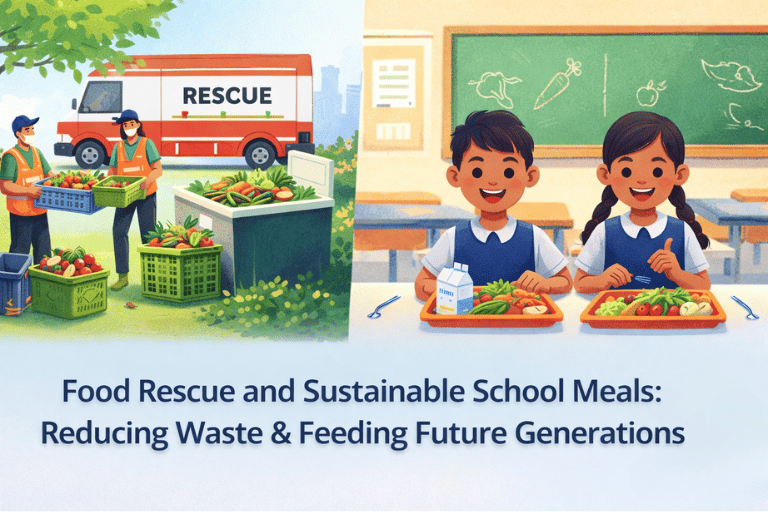
Food Rescue and Sustainable School Meals: Reducing Waste and Nourishing Future Generations
Food rescue and sustainable school meals are transforming how communities address hunger, food waste, and environmental responsibility. Across the globe, millions of tons of edible food are discarded every year while children struggle with food insecurity. At the same time, schools serve millions of meals daily, making them powerful platforms for sustainability and social impact.
By integrating food rescue programs into school meal systems, communities can significantly reduce food waste, improve nutrition access, and lower environmental footprints. This article explores how food rescue and sustainable school meals work together to build resilient, equitable, and environmentally conscious food systems.
Understanding Food Rescue in the Context of Sustainability
Food rescue refers to the recovery of surplus edible food from farms, restaurants, grocery stores, and institutional kitchens, redirecting it to people in need instead of landfills. It operates within a circular economy model where waste is minimized and resources are optimized.
When food ends up in landfills, it decomposes anaerobically and releases methane — a greenhouse gas significantly more potent than carbon dioxide. By preventing food waste through rescue programs, communities lower greenhouse gas emissions while improving food access.
Food rescue and sustainable school meals intersect when rescued food is safely incorporated into educational food programs, ensuring that surplus food nourishes students rather than contributing to environmental degradation.
Why Food Waste in Schools Is a Critical Issue
Schools are among the largest institutional food providers in many countries. However, food waste reduction in schools remains a major challenge.
Common Causes of School Food Waste
Overproduction and inaccurate forecasting
Strict aesthetic standards for produce
Student food preferences
Limited time for lunch periods
Lack of food education and awareness
Studies show that a significant percentage of school meals are discarded daily. This waste represents not only lost food but also wasted water, energy, labor, and financial resources.
Reducing food waste in education systems is not simply about cost savings — it is about environmental responsibility and social equity.
The Link Between Food Rescue and Sustainable School Meals
Sustainable school food programs prioritize:
Local sourcing
Seasonal ingredients
Waste reduction strategies
Ethical procurement
Nutritional quality
When food rescue initiatives are integrated into these programs, schools can:
Divert surplus food from landfills
Supplement meal programs with nutritious options
Reduce procurement costs
Educate students about sustainability
Food rescue and sustainable school meals together create a closed-loop system that benefits students, communities, and the planet.
Environmental Benefits of Food Rescue in School Meal Programs
Reduced Greenhouse Gas Emissions
Food waste accounts for approximately 8–10% of global greenhouse gas emissions. Diverting edible food from landfills significantly reduces methane production.
Conservation of Natural Resources Every meal rescued preserves:
Water used in food production
Energy used in transportation and storage
Agricultural land and soil health
Sustainable school meal sustainability initiatives help schools lower their carbon footprint and move toward climate goals.
Lower Waste Management Costs
Reducing food waste in schools decreases hauling and landfill fees, freeing up budget for nutrition improvements and educational programming.
Social and Nutritional Impact of Sustainable School Food Programs
Food insecurity affects millions of children worldwide. For many students, school meals are the most reliable source of daily nutrition.
Improving Access to Nutritious Meals
Community food rescue programs can provide:
Fresh produce
Dairy products
Whole grains
Protein-rich foods
When safely integrated into school meals, rescued food improves dietary diversity and meal quality.
Supporting Food Equity
Food rescue and sustainable school meals address inequities by ensuring surplus food reaches vulnerable populations instead of being discarded.
Enhancing Student Academic Performance
Proper nutrition directly impacts:
Cognitive function
Concentration levels
Energy and attendance
Behavioral outcomes
Sustainable school food programs are investments in student success.
How Schools Can Implement Food Rescue Programs
Implementing food rescue and sustainable school meals requires strategic planning and compliance with food safety standards.
Step 1 – Conduct a Food Waste Audit
Schools should measure:
Pre-consumer waste (kitchen preparation waste)
Post-consumer waste (plate waste)
Surplus inventory
Data-driven decisions enable targeted waste reduction.
Step 2 – Build Partnerships
Schools can collaborate with:
Local farms
Grocery retailers
Food banks
Non-profit food rescue organizations
Partnerships strengthen community food rescue programs and increase food redistribution capacity.
Step 3 – Establish Safe Food Handling Protocols
Compliance with food safety regulations is essential. Schools must ensure:
Proper temperature control
Traceability
Allergen management
Clear labeling systems
Food rescue and sustainable school meals depend on rigorous safety standards.
Step 4 – Educate Students and Staff
Food waste reduction in schools improves when students understand:
The environmental impact of waste
Portion control
Composting practices
Sustainable food systems
Education fosters long-term behavioral change.
Innovative Models for Sustainable School Meals
Several innovative models are driving progress in school meal sustainability initiatives.
Farm-to-School Programs
These programs prioritize locally sourced ingredients, reducing transportation emissions while supporting regional agriculture.
Share Tables
Students can place unopened, unused food items on designated tables for redistribution rather than disposal.
On-Site Composting Systems
Organic waste that cannot be rescued can be composted and returned to school gardens.
Centralized Food Rescue Hubs
District-wide food rescue systems streamline collection and redistribution logistics.
Each model supports food rescue and sustainable school meals in unique ways.
Policy and Regulatory Support for Food Rescue
Government policies play a critical role in scaling food waste reduction in education.
Liability Protection Laws
Many countries have laws protecting food donors acting in good faith, encouraging surplus redistribution.
Conclusion
Building a Circular Food System Through Schools
Food rescue and sustainable school meals represent a practical and scalable solution to some of the most pressing challenges of our time — hunger, waste, and climate change.
When schools adopt food rescue programs, reduce food waste, and integrate sustainability into meal planning, they become catalysts for systemic change. The combination of environmental stewardship, social equity, and educational leadership makes sustainable school food programs one of the most impactful strategies available today.
Communities that invest in food rescue and sustainable school meals are not just feeding students — they are shaping a healthier, more sustainable future.