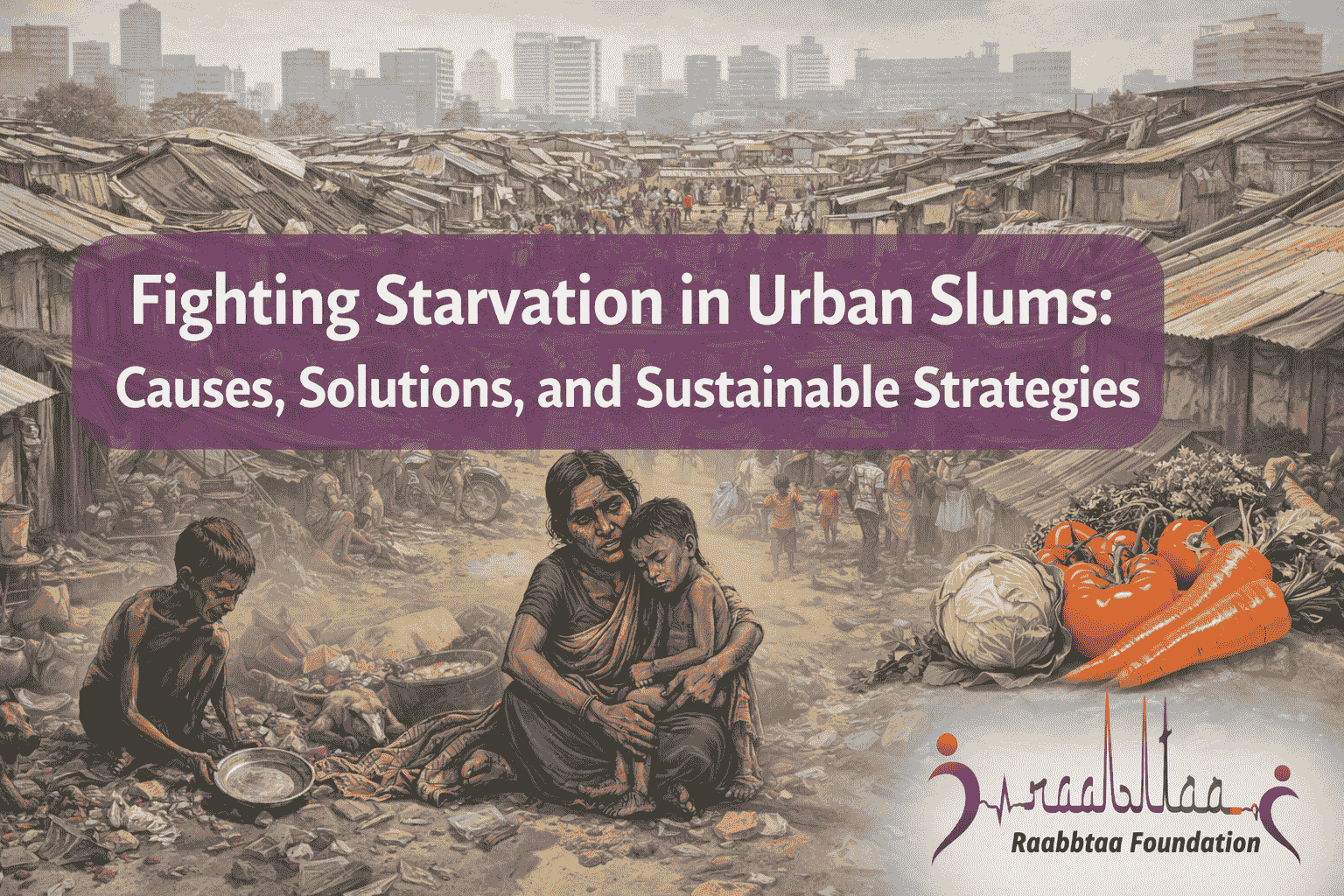
Urbanization is accelerating worldwide, bringing economic opportunity for some but severe hardship for millions living in informal settlements. Fighting starvation in urban slums has become a critical global priority as overcrowding, unemployment, and limited infrastructure restrict access to nutritious food. While cities often symbolize prosperity, their poorest residents face chronic hunger, malnutrition, and food insecurity.
This article explores the root causes of hunger in slum communities, its long-term impacts, and evidence-based solutions that governments, NGOs, and local residents can implement to ensure sustainable access to food.
Understanding the Scale of Starvation in Urban Slums
Urban slums house over one billion people globally, and that number continues to grow. Rapid migration from rural areas, conflict displacement, and economic inequality contribute to the expansion of these settlements. Unfortunately, food systems rarely adapt quickly enough to support these populations.
Starvation in these communities is not always visible as extreme famine. Instead, it often manifests as chronic undernutrition, micronutrient deficiencies, and irregular meal access. Families may eat daily but lack sufficient calories or nutrients to maintain health.
Key Indicators of Food Insecurity
Skipped meals or reduced portion sizes
Reliance on low-cost, low-nutrition foods
Child stunting or wasting
High rates of anemia and vitamin deficiencies
These indicators highlight that fighting starvation in urban slums requires more than food donations—it demands systemic interventions.
Starvation in these communities is not always visible as extreme famine. Instead, it often manifests as chronic undernutrition, micronutrient deficiencies, and irregular meal access. Families may eat daily but lack sufficient calories or nutrients to maintain health.
Root Causes of Hunger in Urban Slum Communities
Addressing hunger effectively requires understanding the structural drivers behind it. Starvation is rarely caused by a single factor; rather, it emerges from interconnected social, economic, and environmental challenges.
1. Poverty and Unstable Income
Most slum residents work in informal sectors such as street vending, day labor, or domestic work. These jobs lack consistent wages and social protections. When income fluctuates, food becomes the first expense families reduce.
2. High Cost of Urban Living
Food prices in cities are typically higher than in rural areas. Transportation, storage, and retail markups increase costs, making nutritious food unaffordable for low-income households.
3. Limited Access to Infrastructure
Slums often lack refrigeration, clean water, and proper cooking facilities. Without these essentials, storing fresh food becomes difficult, forcing residents to purchase small quantities of processed items instead of bulk nutritious ingredients.
4. Lack of Social Safety Nets
Many urban poor lack identification documents or legal residency status, excluding them from government welfare programs. This administrative barrier intensifies hunger risks
The Impact of Starvation on Health and Development
Fighting starvation in urban slums is not only a humanitarian concern but also a public health and economic priority. Chronic hunger affects every stage of life.
Effects on Children
Malnutrition during early childhood can cause:
Stunted physical growth
Delayed cognitive development
Lower academic performance
Increased susceptibility to disease
These effects often persist into adulthood, limiting employment opportunities and perpetuating poverty cycles.
Effects on Adults
Adults experiencing chronic hunger frequently suffer from fatigue, weakened immune systems, and reduced productivity. This lowers earning potential and reinforces financial instability.
Community-Level Consequences
At a societal level, widespread malnutrition reduces workforce efficiency, increases healthcare costs, and slows economic development. Therefore, solving hunger in slums benefits entire cities, not just affected communities.
Why Urban Hunger Requires Different Solutions Than Rural Hunger
Traditional anti-hunger programs often focus on rural agriculture, but urban slums present unique logistical and structural challenges.
Key differences include:
Limited land for food production
Dependence on market purchases rather than farming
Greater population density
Complex supply chains
Because of these factors, fighting starvation in urban slums demands innovative urban-specific strategies rather than rural models adapted to city settings.
Effective Strategies for Fighting Starvation in Urban Slums
Solutions must operate simultaneously at multiple levels: household, community, municipal, and national. Below are proven approaches that have demonstrated measurable success.
1. Community Food Banks and Kitchens
Local food banks and shared kitchens provide immediate relief for families facing food shortages. When managed by residents themselves, these initiatives strengthen community ownership and accountability.
2. Urban Agriculture Initiatives
Even in densely populated areas, small-scale farming can thrive through:
Rooftop gardens
Vertical farming systems
Container gardening
Hydroponic setups
These methods allow residents to grow vegetables and herbs despite space constraints, improving diet quality and reducing food costs.
3. Cash Transfer Programs
Direct financial assistance often proves more effective than food aid. Cash transfers empower families to choose culturally appropriate foods and stimulate local markets.
4. School Feeding Programs
Providing meals in schools ensures children receive daily nutrition while encouraging attendance. This dual benefit improves both health and education outcomes.
5. Nutrition Education
Teaching families how to prepare affordable, balanced meals using locally available ingredients can significantly reduce malnutrition, even when budgets are limited.
Contributions of NGOs and International Organizations
Non-governmental organizations frequently fill gaps left by public systems. Their flexibility allows them to pilot innovative programs tailored to local needs.
Common NGO interventions include:
Emergency food distribution during crises
Microfinance programs for small vendors
Women-led nutrition cooperatives
Mobile health and nutrition clinics
Partnerships between NGOs, local governments, and community leaders produce the strongest outcomes because they combine resources, expertise, and grassroots knowledge.
Challenges Organizations Must Overcome
Community-Led Solutions: The Most Sustainable Approach
While external support is valuable, the most sustainable progress often originates within the communities themselves. Residents understand their challenges better than outsiders and can design culturally appropriate solutions.
H3: Examples of Community Innovation
Cooperative buying groups that purchase food in bulk at lower prices
Shared cooking spaces that reduce fuel costs
Neighborhood composting programs supporting urban gardens
Local savings groups providing emergency food funds
Empowering communities shifts them from aid recipients to active participants in solving hunger.
Examples of Community Innovation
Cooperative buying groups that purchase food in bulk at lower prices
Shared cooking spaces that reduce fuel costs
Neighborhood composting programs supporting urban gardens
Local savings groups providing emergency food funds
Empowering communities shifts them from aid recipients to active participants in solving hunger.
The Role of Technology in Fighting Starvation in Urban Slums
Digital innovation is transforming food access even in low-income urban environments.
Emerging tools include:
Mobile apps connecting surplus food from restaurants to needy households
SMS-based price alerts helping residents find cheaper markets
Digital ID systems enabling access to government subsidies
Blockchain supply tracking reducing food distribution losses
Technology cannot replace policy or community action, but it can dramatically improve efficiency and transparency.
Why Ending Hunger in Slums Benefits Entire Cities
Urban hunger is not isolated; it affects overall city stability. Well-fed populations are healthier, more productive, and better able to contribute economically.
Citywide benefits include:
Reduced healthcare costs
Lower crime rates linked to desperation
Increased workforce participation
Stronger local markets
Investing in food security is therefore not charity—it is strategic urban development.
Practical Steps Individuals Can Take
Even individuals who do not live in slums can support efforts to reduce urban hunger.
Ways to help:
Donate to reputable urban food programs
Volunteer with local hunger relief organizations
Support businesses that donate surplus food
Advocate for equitable urban policies
Reduce personal food waste
Collective action from citizens amplifies institutional efforts.
Future Outlook: Can Urban Hunger Be Eliminated?
Experts agree that eliminating starvation in urban slums is possible within a generation if governments, organizations, and communities coordinate effectively. The tools already exist: sustainable agriculture methods, digital distribution systems, and proven policy frameworks.
The challenge is not technological—it is political and social. Commitment, funding, and inclusive planning determine whether progress continues or stalls.
Conclusion: A Call to Action
Fighting starvation in urban slums is one of the most urgent humanitarian and development challenges of our time. Hunger in cities reflects systemic inequality, but it is also solvable through strategic investment, community empowerment, and policy reform.
Sustainable solutions must combine immediate relief with long-term structural change. When cities ensure that even their most vulnerable residents have reliable access to nutritious food, they build stronger economies, healthier populations, and more stable societies.
Ending urban hunger is not merely an aspiration—it is an achievable goal that requires collective responsibility and decisive action today.