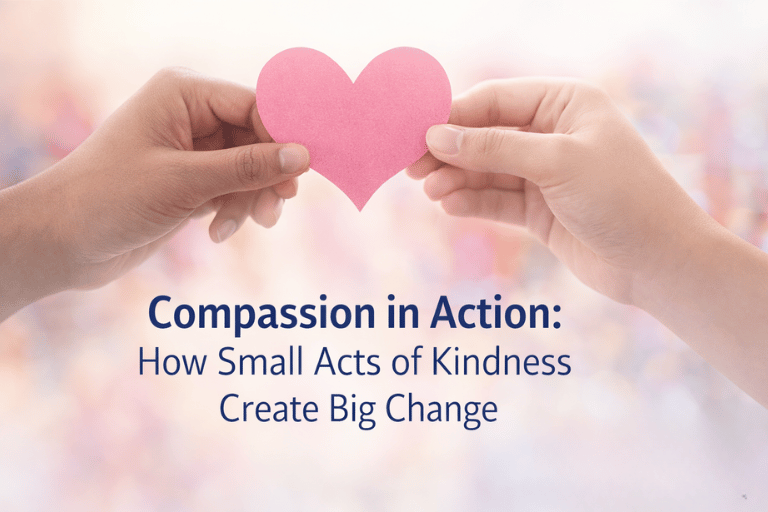
Compassion in Action: How Small Acts of Kindness Create Big Change
In today’s fast-paced world, compassion often takes a back seat. However, kindness remains one of the most powerful forces for positive change. Compassion in action is not just about feeling sympathy. Instead, it is about turning empathy into meaningful behavior.
When people choose compassion, they create stronger communities. Moreover, they inspire others to act with kindness. As a result, small gestures can lead to lasting social impact.
In this article, we will explore how compassion works in real life. Furthermore, we will examine why it matters and how you can practice it every day.
Understanding Compassion in Action
Compassion in action refers to the act of recognizing suffering and taking steps to relieve it. Rather than remaining passive, compassionate people choose involvement.
For example, listening to someone in distress shows care. Similarly, offering help to a stranger demonstrates empathy. These actions may seem small. Nevertheless, they carry immense value.
Moreover, compassion is not limited to emotional support. It also includes financial assistance, volunteering, advocacy, and education. Therefore, it operates on many levels.
Because compassion requires awareness, it begins with mindfulness. When we pay attention to others, we become more responsive. Consequently, we develop stronger emotional connections.
Why Compassion Matters in Today’s Society
Modern society faces numerous challenges. Poverty, loneliness, mental health issues, and inequality affect millions of people worldwide. Therefore, compassion is more important than ever.
Firstly, compassion promotes social harmony. When people care for one another, conflicts decrease. As a result, communities become more peaceful.
Secondly, compassion improves mental well-being. Studies show that helping others reduces stress. Additionally, it increases happiness and life satisfaction.
Furthermore, compassionate societies are more resilient. During crises, people unite instead of dividing. Consequently, they recover faster and stronger.
Most importantly, compassion reminds us of our shared humanity. Although we may differ in background, we share common emotions and needs.
The Science Behind Kindness and Empathy
Scientific research confirms the power of compassion. When people act kindly, their brains release oxytocin, also known as the “love hormone.”
This hormone reduces anxiety. Moreover, it strengthens trust between individuals. Therefore, kindness benefits both the giver and the receiver.
In addition, compassionate behavior activates reward centers in the brain. As a result, helping others feels good naturally.
Psychologists also suggest that empathy can be developed. Through practice, people become more sensitive to emotions. Consequently, compassion becomes a habit rather than an effort.
Because of this, kindness is not just emotional. It is biological and psychological as well.
Real-Life Examples of Compassion in Action
Helping the Homeless
Many volunteers dedicate time to feed homeless individuals. They distribute meals, clothes, and hygiene kits. However, they also offer respect and dignity.
By treating people kindly, they restore self-worth. As a result, individuals feel valued again.
Supporting Mental Health Awareness
Mental health advocates work tirelessly to remove stigma. They organize workshops and support groups. Moreover, they provide safe spaces for expression.
Because of their efforts, many people seek help earlier. Consequently, lives are saved.
Disaster Relief Efforts
During natural disasters, volunteers rush to help victims. They provide shelter, food, and medical care.
Although conditions are difficult, compassion drives them forward. Therefore, recovery becomes possible.
These examples show that compassion works at every level of society.
How Compassion Strengthens Communities
Strong communities are built on trust and cooperation. Compassion plays a central role in this process.
Firstly, kindness encourages participation. When people feel supported, they engage more. As a result, civic life improves.
Secondly, compassion reduces social isolation. Neighbors who care create safer environments. Therefore, crime and neglect decrease.
Thirdly, compassionate leadership inspires unity. Leaders who listen and care gain respect. Consequently, organizations thrive.
Moreover, community compassion creates intergenerational bonds. Elderly citizens feel valued. Meanwhile, young people gain wisdom.
Together, these effects promote long-term stability.
Compassion in the Workplace
Workplaces often focus on productivity. However, compassion can enhance performance significantly.
When employers show empathy, employees feel secure. Therefore, job satisfaction increases.
Additionally, compassionate leadership reduces burnout. Workers feel understood and appreciated. As a result, absenteeism decreases.
Furthermore, supportive environments encourage innovation. Employees are more willing to share ideas. Consequently, creativity flourishes.
Simple acts such as listening, flexibility, and recognition can transform workplace culture.
Practicing Compassion in Daily Life
Compassion does not require grand gestures. Instead, it begins with small daily choices.
Be an Active Listener
Listening attentively shows respect. When people feel heard, they feel valued. Therefore, relationships improve.
Offer Help Without Expectation
Helping without expecting rewards builds genuine trust. Moreover, it strengthens emotional bonds.
Show Gratitude
Thanking others acknowledges their efforts. As a result, positivity spreads.
Practice Self-Compassion
Caring for yourself is equally important. When you are kind to yourself, you treat others better. Therefore, balance is essential.
Volunteer Regularly
Volunteering connects you with community needs. Furthermore, it develops empathy and social awareness.
By adopting these habits, compassion becomes a lifestyle.
Teaching Compassion to Children
Children learn values from their environment. Therefore, teaching compassion early is crucial.
Parents and teachers should model kindness. When children observe caring behavior, they imitate it.
Additionally, storytelling helps build empathy. Stories expose children to different perspectives. Consequently, emotional intelligence improves.
Encouraging sharing and cooperation also develops compassion. Moreover, rewarding kindness reinforces positive habits.
Through education and guidance, children grow into empathetic adults.
Overcoming Barriers to Compassion
Despite its benefits, compassion is sometimes difficult to practice.
Stress and Burnout
When people feel overwhelmed, they become less patient. Therefore, self-care is necessary.
Cultural Differences
Misunderstandings may arise from cultural gaps. However, open-mindedness reduces conflict.
Fear of Vulnerability
Some people avoid compassion due to fear. They worry about being hurt. Nevertheless, emotional openness leads to deeper connections.
Lack of Awareness
Many needs go unnoticed. Therefore, increasing awareness is essential.
By addressing these barriers, we can build more compassionate societies.
The Role of Technology in Spreading Compassion
Technology has transformed communication. Although it has drawbacks, it also spreads kindness.
Social media platforms enable fundraising. Moreover, they raise awareness about social issues.
Online communities provide emotional support. People connect across borders. As a result, global empathy grows.
Additionally, mobile apps facilitate volunteering. They match helpers with causes. Consequently, engagement increases.
When used responsibly, technology amplifies compassion.
Compassion and Social Responsibility
Businesses and institutions play a major role in social welfare. Therefore, corporate compassion is essential.
Ethical practices protect workers and consumers. Moreover, fair policies promote trust.
Many companies invest in community projects. They support education, healthcare, and sustainability.
Because of these efforts, social development accelerates.
When organizations act responsibly, society benefits collectively.
The Long-Term Impact of Compassion
Compassion creates ripple effects. One kind act inspires another. Consequently, kindness multiplies.
Over time, compassionate behavior shapes culture. Societies become more inclusive and just.
Furthermore, compassionate generations raise empathetic children. Therefore, values continue.
Research suggests that compassionate communities enjoy better health outcomes. Moreover, they experience lower violence rates.
In the long run, kindness builds sustainable peace.
How You Can Start Today
You do not need special training to practice compassion. You can begin immediately.
Start by smiling at strangers. Next, offer help when needed. Additionally, listen without judgment.
Support local charities. Moreover, share positive messages.
Reflect on your actions daily. As a result, awareness increases.
Even five minutes of kindness can change someone’s day.
Final Thoughts: Choosing Compassion Every Day
Compassion in action is not a trend. Instead, it is a lifelong commitment to kindness.
Every day, you face choices. You can ignore others’ struggles. Or, you can respond with empathy.
When you choose compassion, you choose connection. Moreover, you choose growth and healing.
Although challenges exist, kindness remains powerful. Therefore, never underestimate your influence.
By practicing compassion consistently, you become part of positive change.
Let your actions speak. Let your heart guide. And let compassion shape your world.