Behind the Scenes of Food Distribution: How Your Food Reaches Your Plate
Every time you walk into a grocery store or order food online, fresh products are readily available. However, what most people do not realize is the complex system that works behind the scenes. In fact, food distribution is one of the most important parts of the global supply chain.
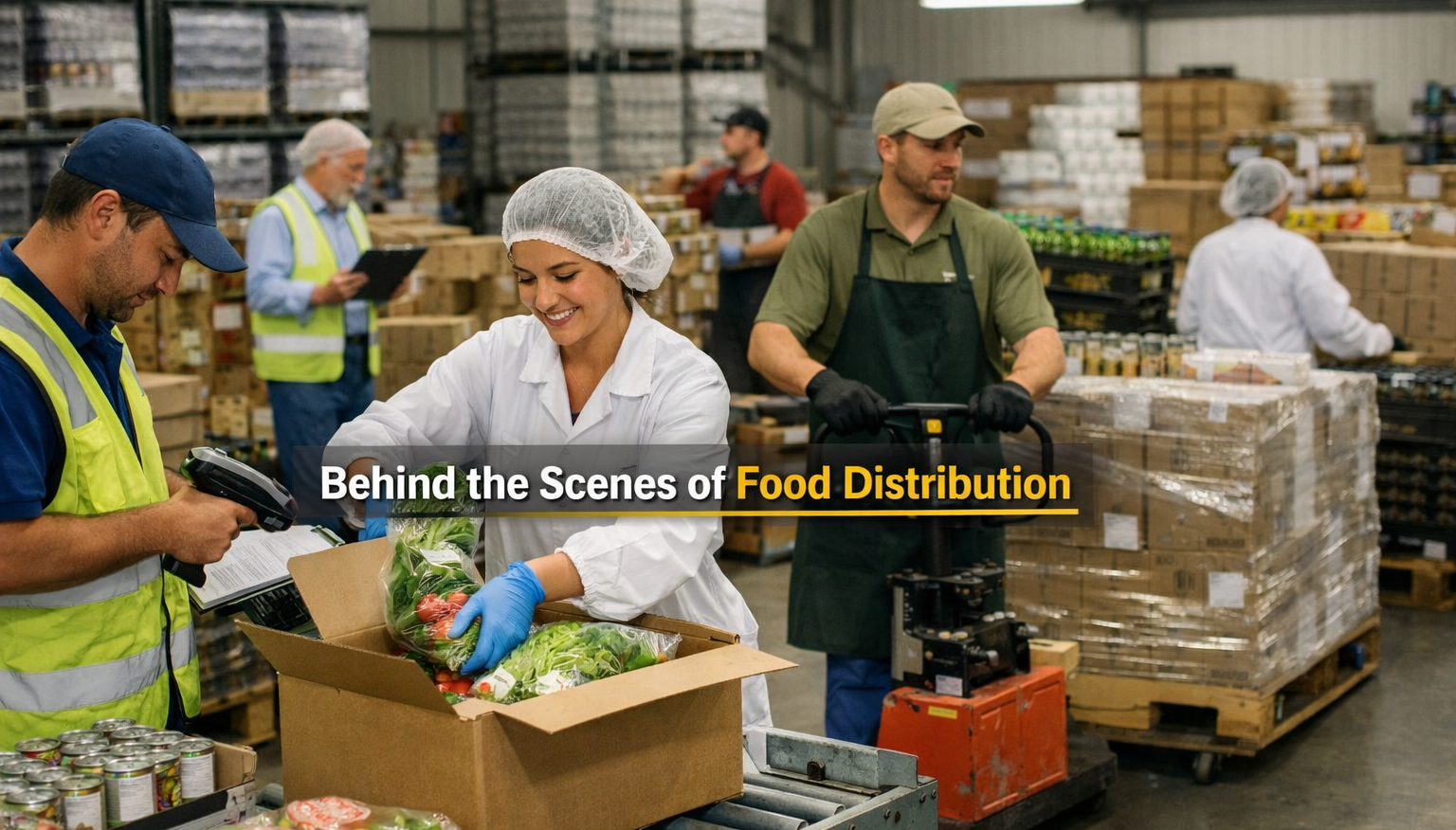
Behind the scenes of food distribution, thousands of professionals work together every day. From farmers and processors to transporters and retailers, each plays a vital role. Moreover, advanced technology and strict safety regulations ensure that food arrives safely.
In this article, we will explore the behind-the-scenes journey of food distribution. Additionally, we will examine how your food travels from farms to your plate. By the end, you will understand why this system is essential for modern life.
What Is Food Distribution?
Food distribution refers to the process of moving food products from producers to consumers. In other words, it connects farms, factories, warehouses, and retailers.
First, food is produced on farms or in manufacturing plants. Then, it is processed, packaged, stored, and transported. After that, it reaches wholesalers, retailers, restaurants, and finally customers.
Because food is perishable, timing is extremely important. Therefore, distributors must work quickly and efficiently. As a result, modern food distribution relies on strong logistics systems.
The Food Distribution Supply Chain Explained
To better understand behind the scenes of food distribution, it is helpful to look at the entire supply chain.
1. Food Production
The journey starts with production. Farmers grow fruits, vegetables, grains, and livestock. Meanwhile, manufacturers produce packaged foods and beverages.
At this stage, quality control is essential. Therefore, producers monitor soil health, animal welfare, and hygiene standards. Additionally, sustainable farming practices are becoming more popular.
2. Food Processing and Packaging
After production, food often goes through processing. For example, grains are milled, meat is cleaned, and vegetables are washed.
Next, products are packaged to protect them from contamination. Moreover, packaging extends shelf life and improves transportation safety. As a result, consumers receive fresh and safe products.
3. Storage and Warehousing
Once packaged, food is stored in warehouses. These facilities maintain proper temperature and humidity levels.
For instance, frozen foods require cold storage, while dry goods need ventilated areas. Consequently, advanced refrigeration systems are widely used.
Furthermore, warehouses organize products for quick distribution. This organization helps reduce waste and delays.
4. Transportation and Logistics
Transportation is one of the most critical parts of food distribution. Trucks, ships, trains, and airplanes move food across regions and countries.
Because timing matters, logistics teams carefully plan routes. Additionally, GPS tracking and route optimization software improve efficiency.
As a result, food reaches its destination faster and in better condition.
5. Wholesale and Retail Distribution
After transportation, products reach wholesalers and retailers. Wholesalers supply large quantities to stores, restaurants, and institutions.
Retailers then display products for customers. Meanwhile, inventory systems track stock levels to avoid shortages.
Finally, consumers purchase food and complete the journey.
The Role of Technology in Food Distribution
Modern food distribution relies heavily on technology. Without digital tools, managing large volumes would be nearly impossible.
Inventory Management Systems
Inventory software tracks product quantities in real time. Therefore, businesses know exactly when to reorder.
As a result, overstocking and understocking are reduced. Moreover, waste is minimized.
Cold Chain Technology
The cold chain refers to temperature-controlled logistics. It ensures that perishable food remains fresh.
Refrigerated trucks, smart sensors, and monitoring software play key roles. Consequently, food safety is greatly improved.
Automation and Robotics
Many warehouses now use automated systems. Robots pick, sort, and pack products quickly.
Because of automation, efficiency increases. Additionally, labor costs are reduced.
Data Analytics and AI
Artificial intelligence predicts demand patterns. Therefore, distributors can prepare in advance.
Furthermore, data analytics helps optimize delivery schedules. As a result, customer satisfaction improves.
Food Safety and Quality Control Measures
Food safety is a top priority in distribution. Without proper controls, contamination could occur.
Hygiene Standards
Workers follow strict hygiene rules. For example, they wear gloves, masks, and protective clothing.
Moreover, facilities are regularly cleaned and inspected. This prevents the spread of bacteria.
Regulatory Compliance
Government agencies set food safety standards. Distributors must follow these regulations.
Therefore, regular audits and certifications are required. Consequently, consumers can trust food quality.
Traceability Systems
Traceability allows companies to track products from origin to sale. If a problem occurs, affected items can be recalled quickly.
As a result, health risks are minimized.
Challenges in Food Distribution
Although food distribution is highly organized, it still faces many challenges.
Supply Chain Disruptions
Natural disasters, pandemics, and political conflicts can interrupt supply chains. Therefore, contingency planning is essential.
For example, alternative routes and backup suppliers are often prepared.
Rising Transportation Costs
Fuel prices and labor costs continue to rise. As a result, distribution expenses increase.
Consequently, companies must find cost-effective solutions.
Food Waste
Food waste is a major concern. Improper storage or delayed delivery can lead to spoilage.
Therefore, better planning and technology are needed to reduce waste.
Environmental Impact
Transportation contributes to carbon emissions. Because of this, sustainable practices are becoming important.
Many companies now use electric vehicles and eco-friendly packaging.
The Importance of Sustainability in Food Distribution
Sustainability is now a major focus in food logistics. Companies are adopting greener practices.
Eco-Friendly Packaging
Biodegradable and recyclable packaging reduces environmental damage. Therefore, many brands are switching to sustainable materials.
Energy-Efficient Warehouses
Solar panels, LED lighting, and smart climate systems save energy. As a result, operational costs decrease.
Reducing Carbon Footprint
Optimized routes and fuel-efficient vehicles reduce emissions. Consequently, businesses become more environmentally responsible.
How Food Distribution Impacts Consumers
Behind the scenes of food distribution directly affects your daily life.
First, it ensures consistent food availability. Therefore, you can shop anytime without shortages.
Second, it maintains affordability. Efficient logistics reduce costs, which keeps prices reasonable.
Third, it guarantees safety. Strict controls protect your health.
Finally, it improves convenience. Online grocery delivery is possible because of advanced distribution systems.
Future Trends in Food Distribution
The food distribution industry continues to evolve.
Blockchain Technology
Blockchain improves transparency and traceability. Therefore, fraud and errors are reduced.
Conclusion: The Hidden Network That Feeds the World
Behind the scenes of food distribution lies a vast and complex network. From farms and factories to warehouses and stores, every step matters.
Because of careful planning, advanced technology, and strict safety standards, food reaches you safely. Moreover, sustainability efforts are shaping the future of the industry.
As consumers, understanding this journey helps us make better choices. Therefore, next time you buy food, remember the incredible system working behind the scenes.