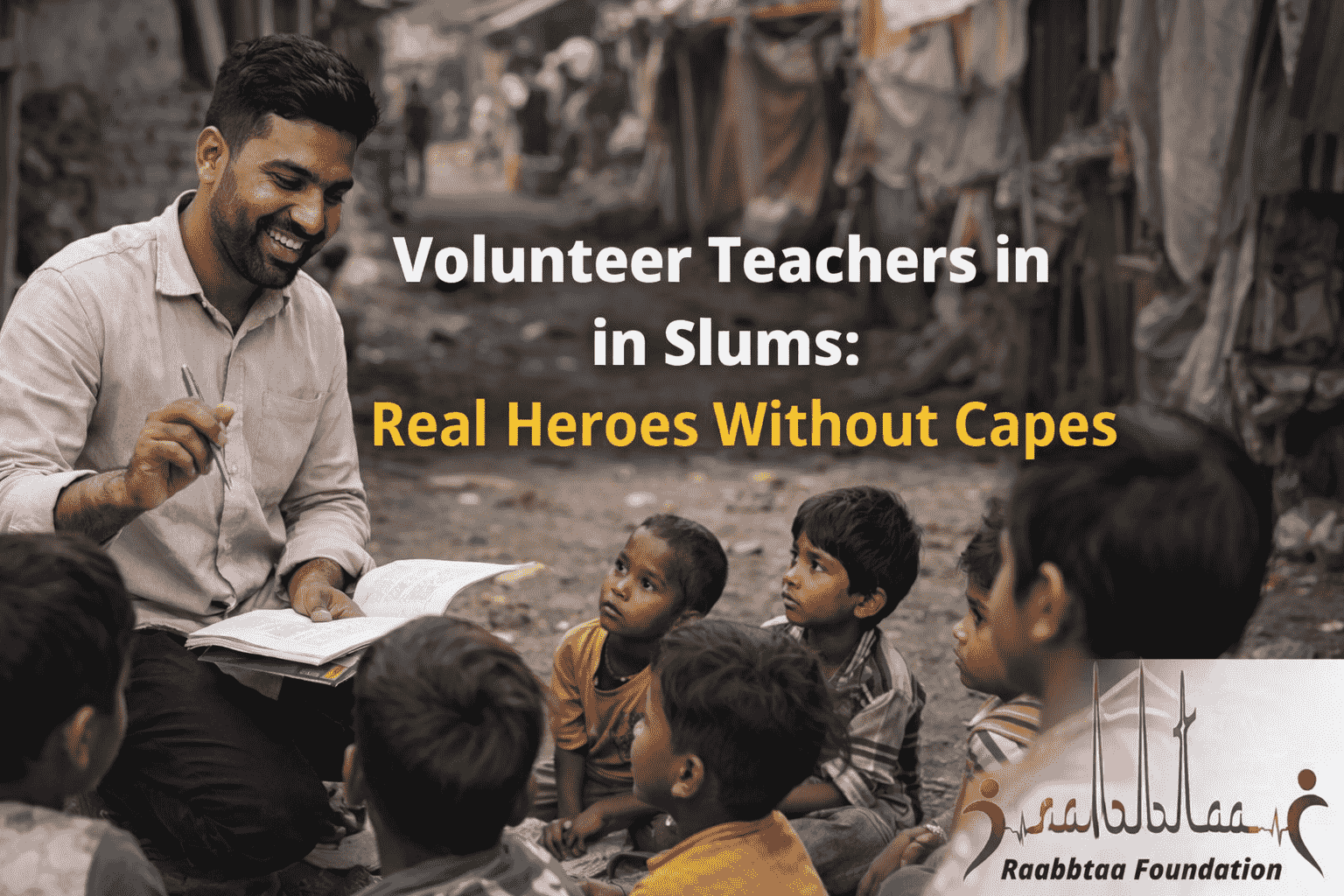
Volunteer teachers in slums are transforming communities one lesson at a time. While policymakers debate reforms and institutions design curricula, these grassroots educators deliver immediate change where it matters most—inside underserved neighborhoods. They are not celebrities or politicians. Yet, their influence rivals that of national reforms because they directly shape the minds of children who would otherwise remain excluded from education.
In many urban slums around the world, access to formal schooling is limited or nonexistent. Poverty, migration, lack of infrastructure, and social inequality prevent children from attending traditional schools. Consequently, volunteer teachers step into this gap, providing not just academic instruction but also hope, stability, and opportunity.
Understanding the Education Crisis in Slums
Structural Barriers to Learning
Slums often lack basic infrastructure such as electricity, sanitation, and safe buildings. Schools, if present, may be overcrowded or underfunded. Children frequently drop out to support family income. As a result, literacy rates remain low, and cycles of poverty persist.
Social and Economic Constraints
Many families living in informal settlements prioritize survival over schooling. Food security, employment, and shelter take precedence. Education becomes a luxury rather than a right. Volunteer teachers in slums help reverse this mindset by demonstrating the tangible benefits of learning.
Gender Disparities
Girls face additional barriers, including early marriage, domestic responsibilities, and safety concerns. Volunteer educators often advocate for girls’ education, creating safe learning spaces and encouraging families to allow daughters to attend classes.
Who Are Volunteer Teachers in Slums?
Volunteer teachers come from diverse backgrounds. Some are university students. Others are professionals, retirees, or community members. What unites them is a commitment to social impact and educational equity.
They typically work with non-profit organizations, community groups, or independently. Unlike salaried teachers, they donate their time and expertise without financial compensation. However, their reward lies in seeing children learn to read, write, and dream.
Why Volunteer Teachers Matter
Immediate Educational Access
Volunteer teachers provide instant access to learning. Instead of waiting for government schools to be built, they create makeshift classrooms in community halls, tents, or even open spaces.
Personalized Attention
Because volunteer-led classes are usually smaller, students receive individualized instruction. This personalized approach accelerates comprehension and builds confidence.
Emotional Support and Mentorship
Children living in poverty often face stress and instability. Volunteer educators act as mentors, role models, and counselors. They build trust and encourage resilience, which significantly improves learning outcomes.
Impact on Children’s Lives
Literacy and Numeracy Development
Basic literacy and numeracy skills form the foundation of all future learning. Volunteer teachers in slums ensure that children master these essential competencies. Many students who begin without recognizing letters eventually progress to reading full stories.
Improved Self-Esteem
Education fosters confidence. When children solve problems or read aloud successfully, they develop a sense of achievement. This psychological growth often translates into better social behavior and ambition.
Expanded Career Possibilities
Education opens doors to employment opportunities beyond manual labor. Students exposed to learning environments begin to envision careers as doctors, engineers, artists, or entrepreneurs.
Benefits for Communities
Volunteer teaching does not only benefit individual students. Entire communities experience transformation.
Higher awareness: Educated children share knowledge with families.
Health improvements: Lessons often include hygiene and nutrition.
Reduced crime: Education lowers delinquency rates.
Economic mobility: Literate populations access better jobs.
Consequently, volunteer educators act as catalysts for long-term social development.
Teaching Methods Used by Volunteer Educators
Activity-Based Learning
Instead of rote memorization, volunteers use games, storytelling, and hands-on exercises. This interactive approach maintains attention and improves retention.
Contextualized Curriculum
Volunteer teachers adapt lessons to local realities. For example, math problems may involve market prices or household budgeting. This relevance makes learning practical and engaging.
Peer Learning Models
Older students often help younger ones. This strategy reinforces knowledge for mentors while supporting beginners. It also cultivates leadership skills.
Challenges Faced by Volunteer Teachers in Slums
Despite their dedication, volunteer educators encounter significant obstacles.
Resource Limitations
Many lack textbooks, stationery, or teaching aids. Some rely on donated materials or self-funding. Limited resources restrict lesson planning and creativity.
Irregular Attendance
Children’s attendance fluctuates due to work obligations, family responsibilities, or relocation. Teachers must constantly adjust lesson pacing.
Emotional Burnout
Witnessing poverty and hardship can be emotionally taxing. Volunteers often balance teaching with jobs or studies, which increases fatigue.
Safety and Infrastructure Issues
Unsafe environments, extreme weather, and lack of facilities complicate teaching conditions. Nonetheless, most volunteers persist because they recognize the importance of their work.
The Psychological Motivation Behind Volunteering
Why do individuals dedicate time and energy without pay? Research in social psychology identifies several motivating factors:
Altruism: Desire to improve others’ lives.
Purpose: Seeking meaningful engagement.
Skill development: Gaining teaching and leadership experience.
Community belonging: Feeling connected to a cause.
Volunteer teachers in slums often report that teaching gives them as much fulfillment as it gives students knowledge.
Role of Nonprofit Organizations
Nonprofit organizations play a critical role in supporting volunteer educators. They provide training, curriculum frameworks, logistical support, and sometimes stipends for transportation or supplies.
These organizations also ensure accountability. They track student progress, maintain attendance records, and coordinate with families. Without such structural backing, volunteer initiatives might struggle to sustain impact.
Technology and Innovation in Slum Education
Digital tools are increasingly influencing grassroots education.
Mobile Learning
Smartphones enable access to educational apps, videos, and interactive quizzes. Even in low-resource settings, mobile learning expands teaching possibilities.
Solar-Powered Classrooms
In areas without electricity, solar panels power lights and devices. This innovation allows evening classes for working children.
Offline Digital Libraries
Portable servers loaded with educational content can function without internet connectivity. Volunteer teachers use them to show lessons and visual demonstrations.
Technology therefore amplifies the reach and effectiveness of volunteer teachers in slums.
Success Stories from the Field
Across continents, volunteer-driven initiatives have produced measurable outcomes. In several communities, literacy rates have doubled within a few years of consistent volunteer teaching programs. Some students have transitioned from informal classes to formal schools, later graduating from universities.
These success stories highlight a crucial point: systemic change often begins with small, consistent actions. A single volunteer teacher can influence dozens of students each year. Over time, this multiplier effect reshapes entire neighborhoods.
Training and Skills Needed to Become a Volunteer Teacher
Although passion is essential, effective teaching also requires preparation.
Key competencies include:
Communication skills
Patience and empathy
Lesson planning ability
Cultural sensitivity
Adaptability
Many organizations provide short training sessions covering classroom management, child psychology, and instructional strategies. These programs ensure volunteers can deliver structured, impactful lessons.
How Volunteer Teaching Breaks the Poverty Cycle
Education is widely recognized as the most reliable path out of poverty. Volunteer teachers in slums initiate this process by equipping children with foundational skills. Literacy enables individuals to access information, apply for jobs, and participate in civic life.
Moreover, educated children often become advocates for education within their families. They encourage siblings and peers to attend classes. This ripple effect gradually shifts community norms toward valuing learning.
The Global Need for Volunteer Teachers
According to international education agencies, millions of children worldwide remain out of school. Rapid urbanization has intensified the problem by expanding informal settlements faster than infrastructure can keep pace.
Governments alone cannot close this gap immediately. Volunteer educators therefore serve as an essential supplementary workforce. They deliver flexible, community-based solutions that formal systems may take years to implement.
Conclusion
Volunteer teachers in slums are true heroes without capes. They confront systemic inequality with chalk, notebooks, and determination. Their classrooms may lack walls, but they build strong intellectual foundations. Their salaries may be zero, yet their impact is immeasurable.
By teaching children who would otherwise remain excluded, they interrupt cycles of poverty, inspire ambition, and empower communities. Supporting these educators is not merely charitable—it is an investment in a more equitable future.