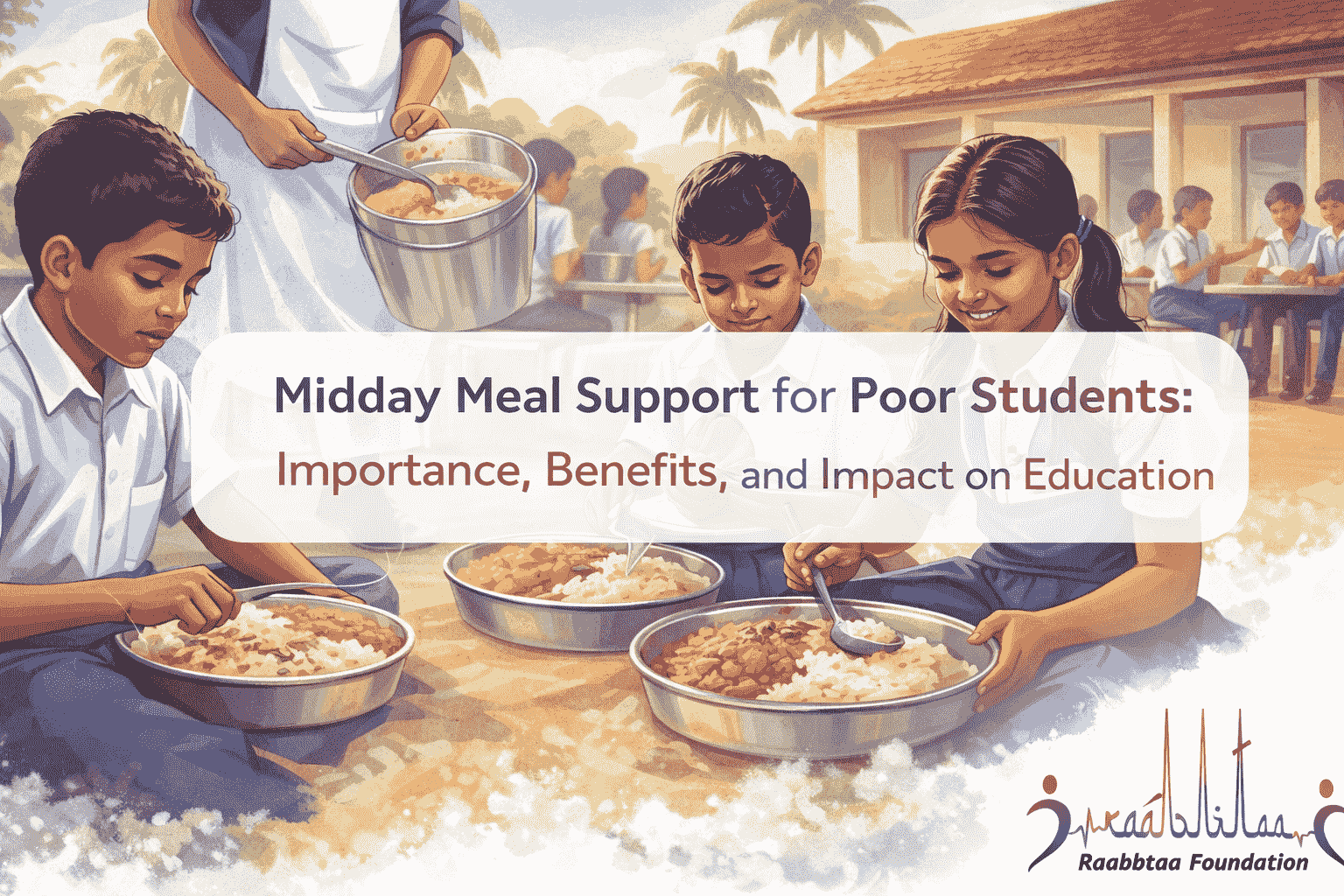
Midday meal support for poor students plays a crucial role in improving education, health, and social equality. For millions of children from low-income families, a school meal is not just food—it is a reason to attend school, a source of nutrition, and a step toward a better future.
In many developing regions, poverty and hunger remain major barriers to education. Children often skip school to work or because their families cannot afford food. Midday meal programs help address both hunger and education by providing nutritious meals during school hours.
This article explores the importance of midday meal support for poor students, its benefits, challenges, and ways communities and organizations can strengthen such programs.
What Is Midday Meal Support for Poor Students?
Midday meal support refers to programs that provide free or subsidized meals to students, especially those from economically disadvantaged backgrounds, during school hours.
These programs are usually implemented by governments, NGOs, and community organizations to achieve several objectives:
* Improve child nutrition
* Increase school enrollment and attendance
* Reduce dropout rates
* Promote social equality
In countries like India, the Midday Meal Scheme is one of the largest school feeding programs in the world, benefiting millions of students daily.
Why Midday Meal Support Is Important
Fighting Hunger Among Children
Hunger is one of the biggest obstacles to learning. A hungry child cannot concentrate, participate, or perform well in school. Midday meals ensure that children receive at least one nutritious meal a day, improving their physical and mental health.
Encouraging School Attendance
Many poor families struggle to provide regular meals. Offering free food at school encourages parents to send their children to school regularly, improving attendance and reducing absenteeism.
Reducing Dropout Rates
Financial difficulties often force children to leave school early. Midday meal programs act as an incentive for families to keep their children in school, especially in rural and underprivileged areas.
Benefits of Midday Meal Support for Poor Students
Midday meal programs provide several short-term and long-term benefits for students and society.
Improved Nutrition and Health
Nutritious meals help prevent malnutrition, anemia, and other health issues common among poor children. Proper nutrition supports:
* Brain development
* Physical growth
* Strong immunity
Healthy children are more likely to attend school regularly and perform better academically.
Better Academic Performance
Students who receive adequate nutrition show improved concentration, memory, and learning ability. Teachers often observe higher participation levels among children who benefit from midday meals.
Social Equality and Inclusion
Midday meal programs bring children from different social and economic backgrounds together. Sharing meals reduces discrimination and promotes equality and social harmony.
Economic Relief for Families
Providing free meals reduces the financial burden on low-income families. For many households, this support allows them to allocate resources to other essential needs like healthcare and education materials.
Contribution of NGOs and Community Organizations
Non-governmental organizations and community groups often support midday meal programs by:
* Donating food or funds
* Setting up community kitchens
* Providing volunteers
* Monitoring program implementation
Their involvement strengthens the reach and sustainability of meal programs, especially in underserved areas.
How Midday Meal Programs Impact Society
Midday meal support for poor students does not just benefit individuals—it strengthens society as a whole.
Breaking the Cycle of Poverty
Education is one of the most effective tools for reducing poverty. By improving school attendance and learning outcomes, midday meal programs help children build better futures.
Promoting Gender Equality
In many communities, girls are less likely to attend school. Free meals encourage families to send both boys and girls to school, promoting gender equality.
Creating Employment Opportunities
Midday meal programs create jobs for cooks, helpers, transport workers, and suppliers, supporting local economies.
Nutritional Guidelines for Midday Meals
A balanced midday meal should include:
* Cereals or grains for energy
* Pulses or protein sources
* Vegetables for vitamins and minerals
* Occasionally fruits or dairy products
Providing diverse and nutritious meals ensures better health outcomes for students.
The Future of Midday Meal Support
The future of midday meal programs lies in improving quality, expanding coverage, and ensuring sustainability.
Key priorities include:
* Enhancing meal nutrition
* Strengthening infrastructure
* Increasing funding
* Using technology for monitoring
* Encouraging community involvement
With proper planning and collaboration, midday meal programs can continue transforming the lives of millions of students.
Conclusion
Midday meal support for poor students is more than a welfare initiative—it is an investment in education, health, and social development. By addressing hunger and improving school attendance, these programs help children reach their full potential.
Governments, schools, NGOs, and communities must work together to ensure that every child has access to nutritious meals and quality education. Strengthening midday meal programs will not only improve individual lives but also build a healthier, more educated, and more equitable society.