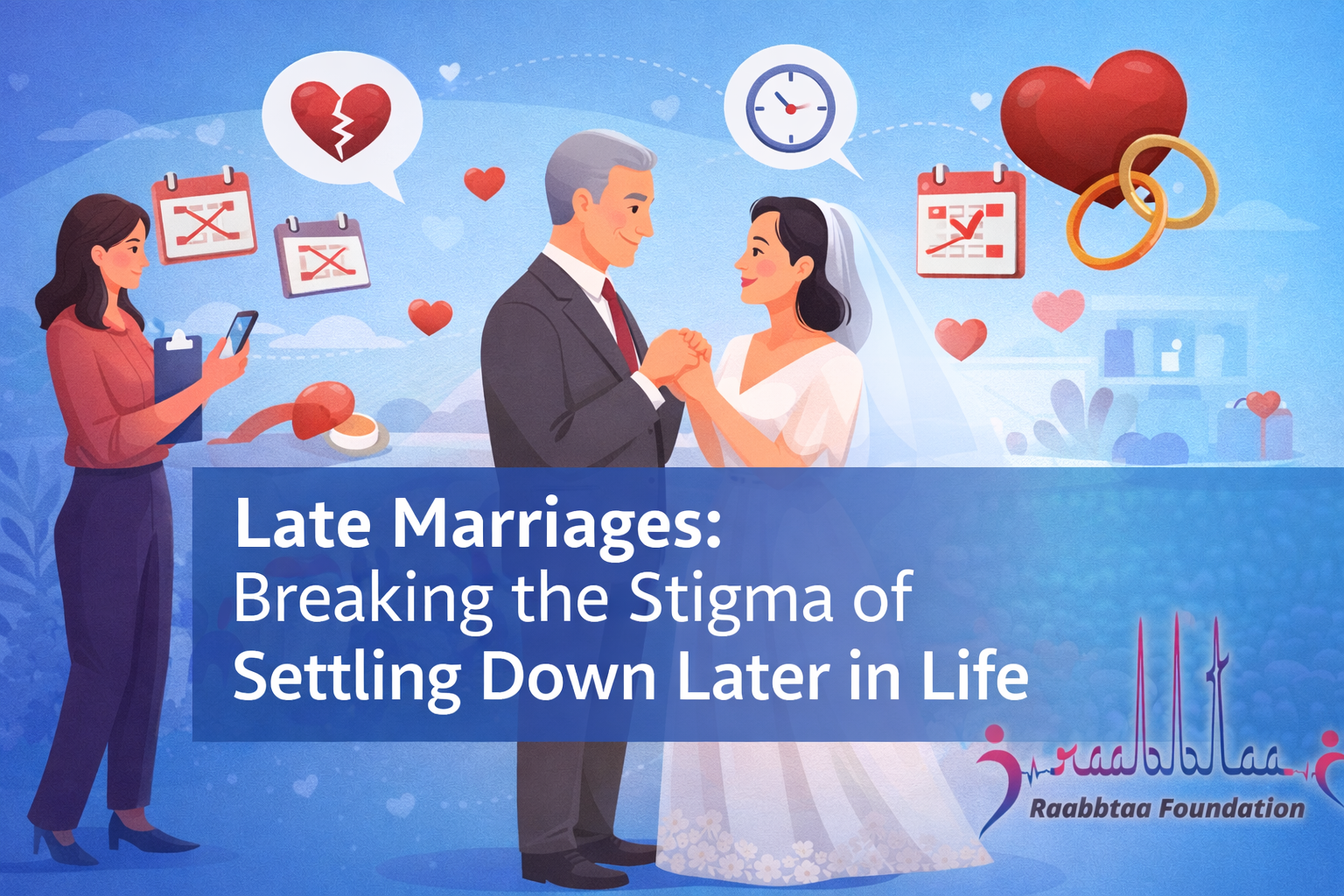
Late Marriages: Breaking the Stigma of "Settling Down" Later in Life
Marriage has long been considered a milestone that should happen at a certain age. In many cultures, especially in traditional societies, people are often expected to marry in their early or mid-twenties. However, in recent years, late marriages have become increasingly common. Many individuals are choosing to focus on education, careers, financial stability, and personal growth before committing to marriage.
Despite this growing trend, the stigma around marrying later in life still exists. People who marry in their thirties or forties are often judged, questioned, or labeled as being “too selective” or “late to settle down.” This blog explores the reasons behind late marriages, their benefits, and how society can move toward acceptance.
Understanding Late Marriages
Late marriages refer to marriages that occur later than the traditional or socially expected age. While definitions vary by region and culture, marriage after the age of 30 is often considered late in many societies.
Today, social norms are evolving. People are redefining what it means to settle down, recognizing that marriage is a major life decision that should not be rushed.
Why Are Late Marriages Becoming More Common?
Several social and economic changes have contributed to the rise of late marriages.
1. Focus on Education and Career
Higher education and career development require time and dedication. Many individuals prefer to establish themselves professionally before considering marriage.
This shift is especially noticeable among women, who now have greater access to education and employment opportunities than ever before.
2. Financial Stability
Marriage often comes with financial responsibilities, including housing, healthcare, and family planning. Many people choose to marry later so they can achieve financial independence and stability first.
Financial security reduces stress and helps couples build a stronger foundation for married life.
3. Personal Growth and Self-Discovery
Late marriages allow individuals to better understand themselves, their goals, and their values. This self-awareness often leads to healthier and more compatible relationships.
People who marry later often know what they want in a partner and are more emotionally mature.
4. Changing Social Norms
Society is gradually becoming more accepting of diverse lifestyles. Marriage is no longer seen as the only path to happiness or success.
Urbanization, globalization, and exposure to different cultures have all played a role in changing attitudes toward marriage.
The Social Stigma Around Late Marriages
Even with changing trends, late marriages are still surrounded by misconceptions.
1. Fear of Being Judged
Individuals who marry later often face questions like:
* “Why are you still single?”
* “Are you too picky?”
* “Is something wrong?”
Such comments can create unnecessary pressure and emotional stress.
2. Family Expectations
In many cultures, families play a major role in marriage decisions. Parents may worry about social reputation or fear that their children will miss opportunities.
3. Biological Concerns
Some people assume that marrying later means difficulties in starting a family. While biological factors can play a role, modern healthcare and fertility options have expanded possibilities.
Benefits of Marrying Later in Life
Late marriages can offer several advantages that contribute to long-term relationship success.
1. Emotional Maturity
Individuals who marry later tend to have greater emotional intelligence and communication skills. They are often better equipped to handle conflicts and responsibilities.
2. Stronger Compatibility
People who marry later are often more selective and thoughtful in choosing partners. This increases the likelihood of compatibility and shared values.
3. Financial Readiness
Couples who are financially stable experience less stress related to expenses, debts, or career uncertainty.
Financial readiness allows couples to focus more on building a meaningful relationship.
4. Clear Life Goals
Late marriages often bring together individuals who have already defined their goals and priorities. This clarity helps couples support each other more effectively.
Psychological Advantages of Late Marriages
Research and observations suggest that late marriages can have positive psychological effects.
1. Better Decision-Making
With age comes experience. Individuals who marry later often make decisions with greater care and consideration.
2. Reduced Impulsiveness
Younger couples may sometimes rush into marriage due to social pressure or infatuation. Late marriages often result from thoughtful planning rather than impulsive decisions.
3. Greater Independence
People who have lived independently before marriage often bring confidence and self-reliance into their relationships.
Challenges of Late Marriages
While late marriages have many benefits, they also come with certain challenges.
1. Adjusting to Shared Life
Individuals who have lived alone for many years may initially find it challenging to adjust to sharing space and routines.
2. Family Planning Concerns
Couples who marry later may face time constraints when planning children. However, medical advancements and alternative options provide solutions for many couples.
3. Social Pressure
Society can sometimes continue to judge or question late marriages, which may affect confidence and peace of mind.
Conclusion
Late marriages are not a sign of delay or failure but a reflection of changing priorities and greater awareness. People who marry later often bring maturity, stability, and clarity into their relationships.
Breaking the stigma around late marriages requires understanding that there is no perfect timeline for settling down. Every individual’s journey is different, and happiness does not depend on marrying early or late but on making choices that align with personal values and goals.
As society continues to evolve, acceptance of late marriages will grow, creating a culture where people are free to choose their own paths without fear of judgment.