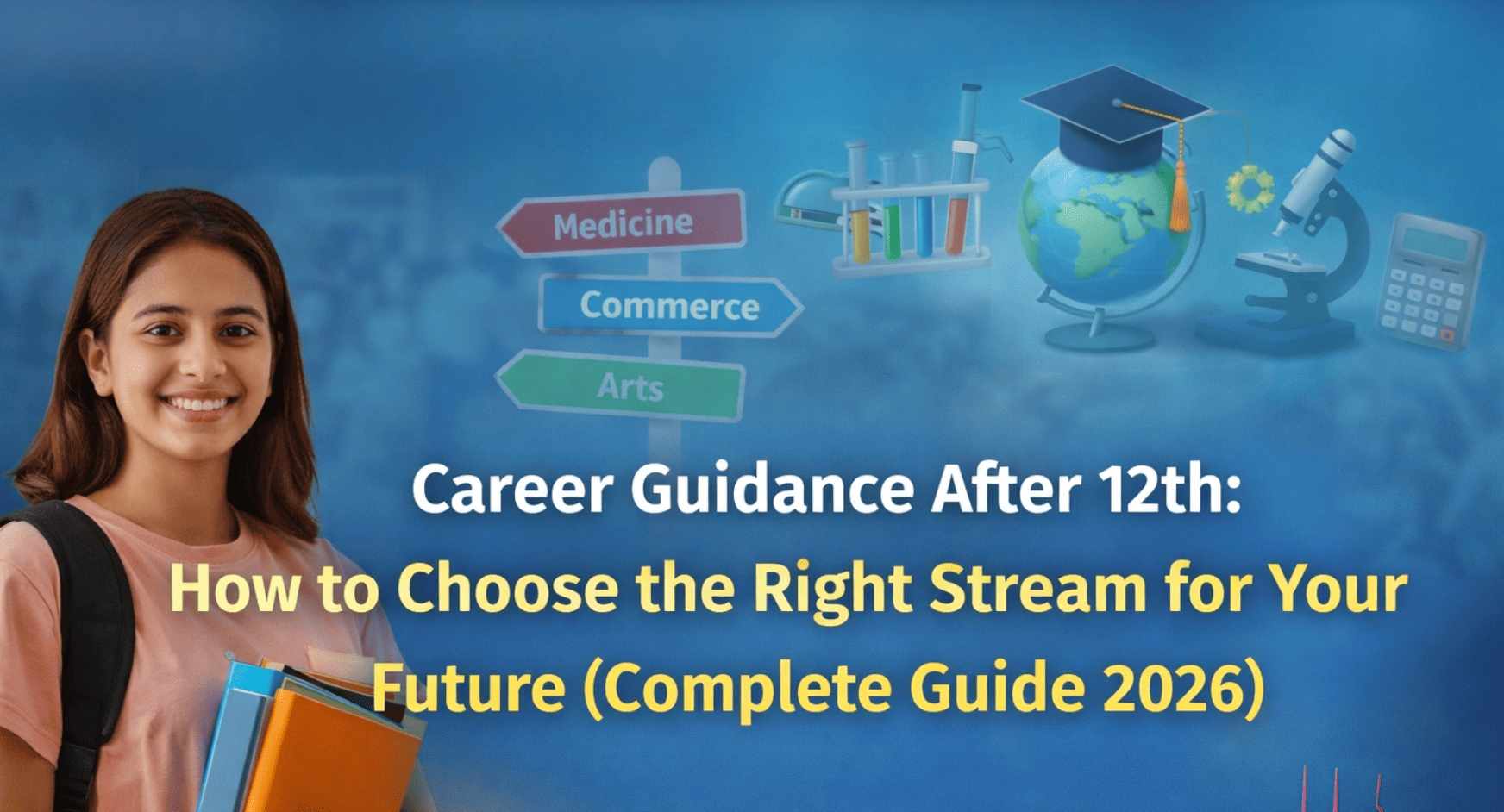
Career Guidance After 12th: Choosing the Right Stream for Your Future
Choosing the right stream after 12th is one of the most important decisions in a student’s life. Your selection directly influences your higher education, career path, earning potential, and professional satisfaction. Therefore, proper career guidance after 12th becomes essential to avoid confusion and long-term regret.
Every year, millions of students complete their 12th grade and face the same question: What should I do next? Should you pursue Science, Commerce, Arts, professional courses, vocational training, or prepare for competitive exams?
In this comprehensive guide, we will explore career options after 12th, factors to consider while choosing a stream, popular career paths, emerging fields, and expert tips to help you make an informed decision.
Behind the scenes of food distribution, thousands of professionals work together every day. From farmers and processors to transporters and retailers, each plays a vital role. Moreover, advanced technology and strict safety regulations ensure that food arrives safely.
In this article, we will explore the behind-the-scenes journey of food distribution. Additionally, we will examine how your food travels from farms to your plate. By the end, you will understand why this system is essential for modern life.
Why Career Guidance After 12th Is So Important
Career decisions made after 12th standard lay the foundation for your future. Without proper guidance, students often:
Choose streams based on peer pressure
Follow family expectations blindly
Select courses based only on salary potential
Ignore personal interests and aptitude
However, the right career guidance after 12th helps you:
Identify your strengths and weaknesses
Align your interests with career opportunities
Understand market trends
Avoid costly mistakes
Therefore, taking time to evaluate your options ensures long-term success and satisfaction.
Key Factors to Consider Before Choosing the Right Stream After 12th
Before selecting your career path, consider the following crucial factors.
1. Identify Your Interests
Ask yourself:
What subjects do I enjoy studying?
What activities excite me?
What kind of work environment do I prefer?
If you enjoy problem-solving and experiments, Science might be suitable. On the other hand, if you love numbers and business strategies, Commerce could be ideal. Meanwhile, creative thinkers may thrive in Arts or Humanities.
2. Assess Your Skills and Aptitude
Your interest alone is not enough. You must also evaluate your natural abilities.
For example:
Strong analytical skills → Engineering, Data Science
Communication skills → Law, Media, Public Relations
Creativity → Design, Animation, Fine Arts
Leadership qualities → Management, Entrepreneurship
Taking aptitude tests and career counseling sessions can significantly improve decision-making.
3. Research Career Opportunities
While passion is important, understanding job prospects is equally crucial. Therefore, research:
Industry demand
Salary expectations
Growth potential
Required qualifications
This approach ensures that your career choice remains sustainable in the long run.
4. Consider Financial Factors
Some professional courses require substantial investment. Hence, evaluate:
Tuition fees
Duration of study
Availability of scholarships
Return on investment (ROI)
Proper planning reduces financial stress later.
Transportation is one of the most critical parts of food distribution. Trucks, ships, trains, and airplanes move food across regions and countries.
Because timing matters, logistics teams carefully plan routes. Additionally, GPS tracking and route optimization software improve efficiency.
As a result, food reaches its destination faster and in better condition.
Career Options After 12th Science
Science is often considered the most versatile stream because it opens doors to multiple fields. Students can choose from Medical, Non-Medical, or emerging interdisciplinary domains.
Medical Field (PCB Students)
Students with Physics, Chemistry, and Biology can pursue:
MBBS
BDS
BAMS
BHMS
Nursing
Physiotherapy
Biotechnology
Pharmacy
Medical careers require dedication and years of study. However, they offer stability, respect, and high earning potential.
Non-Medical Field (PCM Students)
Students with Physics, Chemistry, and Mathematics can opt for:
Engineering (Mechanical, Civil, Computer Science, Electrical)
Architecture
Data Science
Artificial Intelligence
Robotics
Aviation
Defense Services
Engineering remains one of the most popular career options after 12th, especially with the growth of technology sectors.
Emerging Career Options in Science
In recent years, new-age careers have gained popularity, such as:
Cybersecurity
Machine Learning
Environmental Science
Space Technology
Game Development
These careers offer exciting opportunities and global demand.
Career Options After 12th Commerce
Commerce is ideal for students interested in business, finance, and management.
Professional Courses in Commerce
Chartered Accountancy (CA)
Company Secretary (CS)
Cost and Management Accounting (CMA)
Bachelor of Commerce (B.Com)
Bachelor of Business Administration (BBA)
Banking and Insurance
Professional certifications like CA and CMA are challenging but highly rewarding.
Careers in Business and Management
Commerce students can build careers in:
Finance
Marketing
Human Resources
Investment Banking
Entrepreneurship
Business Analytics
Moreover, with the rise of startups and digital businesses, commerce graduates have more opportunities than ever before.
Emerging Commerce Careers
Financial Technology (FinTech)
Digital Marketing
E-commerce Management
Stock Market Analysis
These fields combine technology with business knowledge, making them highly attractive.
Career Options After 12th Arts/Humanities
Arts or Humanities offer diverse and flexible career paths. Contrary to common myths, Arts students have numerous high-paying career options.
Popular Courses in Arts
Bachelor of Arts (BA)
Journalism and Mass Communication
Law (LLB)
Psychology
Sociology
Political Science
Fine Arts
Career Opportunities in Arts Arts students can pursue careers in:
Civil Services
Teaching
Content Writing
Media and Journalism
Public Relations
Graphic Design
Social Work
With globalization and digital media growth, creative and analytical roles are expanding rapidly.
Professional and Vocational Courses After 12th Not every student wants a traditional degree. Therefore, vocational courses provide skill-based career options.
Some popular options include:
Hotel Management
Event Management
Fashion Designing
Interior Designing
Animation and Multimedia
Photography
Culinary Arts
These programs are shorter in duration and focus on practical skills, enabling faster employment.
How to Choose the Best Career After 12th Choosing the best career after 12th requires a structured approach.
Step 1: Self-Assessment
Make a list of:
Your strengths
Weaknesses
Interests
Long-term goals
This clarity simplifies decision-making.
Step 2: Career Counseling
Professional counselors use psychometric tests to analyze personality, aptitude, and career compatibility. Therefore, expert guidance can prevent costly mistakes.
Step 3: Explore Internship Opportunities
Short internships or workshops provide real-world exposure. Consequently, students gain clarity before committing to long-term programs.
Step 4: Talk to Industry Professionals
Connecting with professionals helps you understand practical challenges, salary expectations, and growth opportunities.
Common Mistakes to Avoid While Choosing the Right Stream After 12th
Many students make avoidable errors. Here are some mistakes you should avoid:
Choosing a career only because friends selected it
Following trends without research
Ignoring personal passion
Underestimating course difficulty
Not checking accreditation of institutions
Avoiding these pitfalls ensures better career alignment.
High-Demand Career Fields in 2026 and Beyond Future career planning after 12th should consider emerging industries.
Some high-demand fields include:
Artificial Intelligence
Data Science
Renewable Energy
Healthcare Technology
Digital Marketing
Cybersecurity
Sustainability Management
Technology and sustainability are shaping the global job market. Therefore, aligning your education with these trends can enhance employability.
Frequently Asked Questions (FAQs)
Which stream has the best career opportunities after 12th?
There is no single best stream. The right choice depends on your interests, skills, and long-term goals.
Is career counseling necessary after 12th?
While not mandatory, career counseling significantly improves clarity and confidence in decision-making.
Final Thoughts on Career Guidance After 12th
Career guidance after 12th is not about choosing the most popular option. Instead, it is about choosing the right stream that aligns with your passion, strengths, and future aspirations.
Take time to research. Seek expert advice. Evaluate long-term growth. Most importantly, choose a path that excites and motivates you.
Remember, your career is a long journey. Therefore, make a thoughtful and informed decision today to build a successful tomorrow.